

JUSTICE JAMAL JONES DOESN'T WANT AN OSCAR
Bryce Ray, Justice Jamal Jones
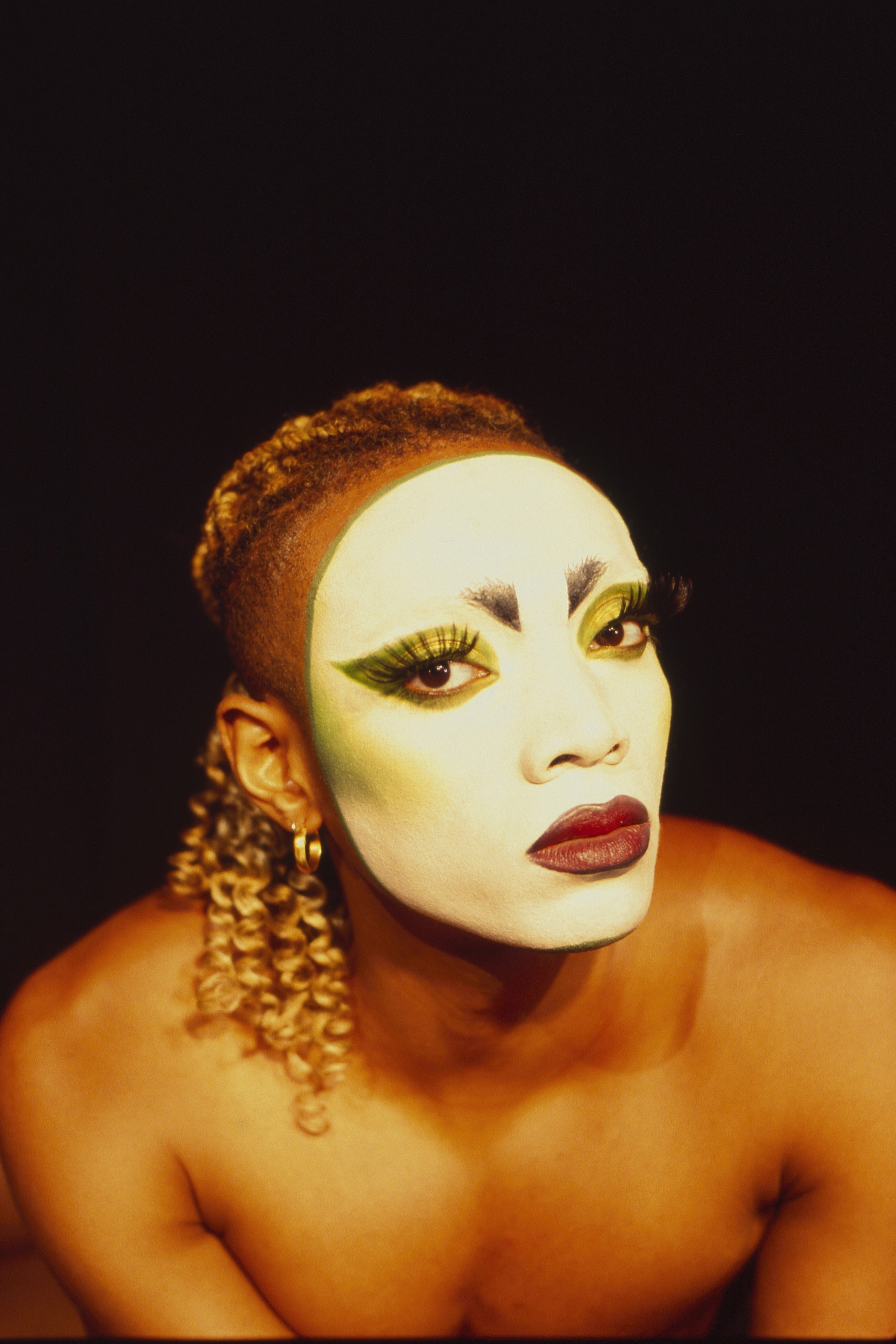
JUSTICE JAMAL JONES DOESN’T WANT AN OSCAR
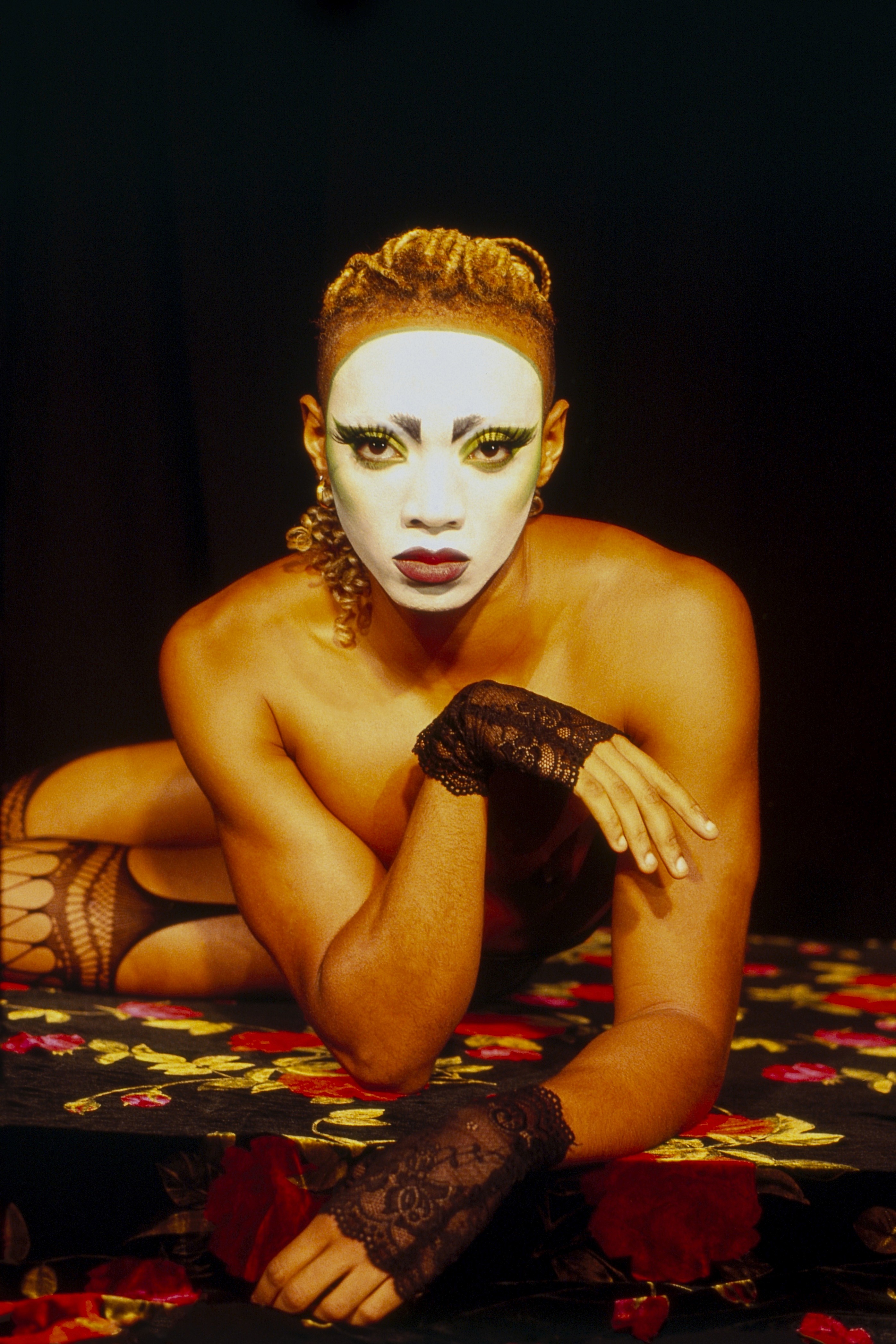
Justin Jamal Jones is a multidisciplinary filmmaker with a lot on their mind. Through their work, Justice explores race, sexuality, gender, and queerness in ever evolving ways. Their debut film How to Raise a Black Boy was shown internationally at over 30 film festivals and received numerous accolades. A 2021 Sundance Ignite Fellow, Justice has directed work for the likes of MTV and Calvin Klein. Their sophomore feature, Crossroads Blues is set for pre-production with filming beginning later this year. Their essay “When We Touch,” about queer intimacy, was included in the 2023 anthology A Pill for Promiscuity. Justice facetimed us from their Crown Heights apartment to discuss their journey to filmmaking, how they’re queering film, and why they don’t prescribe to ordinary benchmarks of success.
BRYCE RAY: Alright, so what is your relationship to Rocky Horror?
JUSTICE JAMAL JONES: My relationship to the movie is more in terms of aesthetics and film. You know, everything is so referential to the film. I remember the first time I ever learned of Rocky Horror was watching Glee as a kid. Then I went and looked more into it. I found out my parents used to go to showings. I thought that was so cool--the experience of it: the throwing popcorn and all the shenanigans. But I still only really know it through other people and other things.
BR: Why do you think that Rocky Horror has been able to live on so long--particularly amongst queer audiences?
JJ: I think because it’s a performance piece with many tentacles. It’s a film but there is also this theatrical aspect to it. It’s immersive. It’s musical. It hits so many of these points of performance. The way it’s given to audiences through the form of a midnight showing feels like a very queer way to see film. The whole experience of it feels inherently queer.
BR: How do you as a filmmaker express your own queerness through your work?
JJ: For me, it has a lot to do with warping the timeline. I’ve been thinking a lot about film as a colonial tool. I think it enacts some sort of violence and role plays the violence of colonization. We use terms like “capture” and “shoot.” Even the ways that directors move around with their crews feels a bit like a crusade. It’s this force that can be paralyzing to others. For me, queering film is breaking down the patriarchal structure of film and replacing it with a more feminine and community-oriented perspective of making art. Once it’s in post, looking at the art and seeing what we’ve made--what’s been documented--and allowing myself to not stitch it in any linear way. I like to mess with form and color and sound. I also think that allowing a film to know what it is is one way to queer film. I want my films to know they’re films. I want those that see my films to know that they are watching a performance. It’s not real life. I’m not a realist. I want people to see my films and see things that they can’t see in everyday life.
BR: What inspires you to look at in that light? I feel like a lot of filmmakers--especially these days--are trying to do the opposite.
JJ: I think the capturing of reality aligns with this obsession with creating and curating other people’s lives. Capturing reality can become quite violent because reality is your reality--it’s never going to be anyone else’s. Capturing people in your reality can be dangerous. I want to make things work outside of my reality and allow things to ebb and change. It’s also just so much more fun. As an artist, my orientation is to mess around and fuck things up. I enjoy that. I think that’s a lot of what Rocky Horror does. You know you’re watching a film. They even look into the camera. It doesn’t take itself too seriously while also doing just that. It pushes boundaries and tries new things.
BR: What’s so great about Rocky Horror is that it is a film that knows exactly what kind of film it is and what kind of films that it is referencing. It’s so campy and so indicative of those 1950s sci-fi B-movies. But then it’s got these gothic horror elements added on to it. Then when you add in Dr. Frank-n-furter, a self appointed “sweet transvestite” and the fact that most of the characters are transexual aliens from the planet Transexual, the queerness of the film gets blended into the sci-fi and horror aesthetics. It creates this meta commentary on what you can do with film and what you can put to film.
JJ: Those identities can also transform the way you make movies. My films don’t follow any kind of straight, cis identity. My queerness has allowed me to see my world differently; thus, my films are going to be even more from that viewpoint. It’s like I can fuck with that structure because I’ve already fucked with this structure. Even the ways that our friend group works. Sometimes the little Nebraska boy in me is like, What the fuck? How did I get here? This is amazing! You know what I mean? I never thought that I’d be able to wear what I want to wear and identify the way I want to identify. I feel sexy.
BR: And to have these friends that are so unadulteratedly queer and sexy and just so themselves. They’re whatever they want to be.
JJ: Also the friend group feels like its own Rocky Horror in a sense. There are so many different types of us. I was thinking about this the other day: the sexuality of the queer family structure. It’s so intimate. I’m so happy to be in a space where people’s relations can change to each other and it’s not necessarily questioned.
BR: Oh, definitely. I think that’s so intrinsic in queer friendships and relationships. I feel like so many queer friendships start out with sex and then grow into friendship or vice versa. It’s so much more fluid than what heteronormativity allows.
JJ: Even within that, in our friend group we have faggots and dolls. There can be a back and forth. One day the faggot might be a doll and a doll might be the faggot. It’s kind of blown my mind. I think of Silas and I’s friendship. I’ve known Silas the longest out of the group, and we’ve traded places so many times. We were joking last night about the trade-to-trans pipeline and the trans-to-trade pipeline. The back and forth is so exciting to experience.
BR: Going back a little bit, I’m curious about how you got started in filmmaking.
JJ: Growing up, I was a theatre kid. I was the little boy who was angry because I didn’t get cast in my community theater production of Annie. I ate those girls up at the audition, and I didn’t get cast. I was a hardcore theatre kid. My junior year of high school, I went to an NYU summer program that really opened my eyes to a lot of different things. I decided I wanted to be a film actor. Then I went to NYU for acting before realizing that acting just wasn't for me. I was in the Lee Strassberg program, and it was more than a little bit outdated. The people they were wanting to make were Marlon Brandos and Marilyn Monroes. I knew that I didn’t look like that and would never play those things. Nor did I want to. I had a moment where my queerness started to take shape in a different way, changing my trajectory. I remember I was tortured by this character named Belize from Angels in America. I hated him because everyone said I should play him.
BR: Just because Belize is Black and gay.
JJ: Right. I hated Belize. You’re telling me that this Black, gay man in the middle of the AIDs crisis has time to console these white gays when in reality he would’ve died faster than his white counterparts? I was like, what the fuck? As my gender started to change--I started to behave and look different--I ended up having to leave acting school because it became toxic for me. I had to ask myself, what do I want to do? Then that became filmmaking for me. It was a way for me to create something for myself. I remember acting on some NYU film bro’s set, thinking, I can do that. Then I eventually made my first film and just went for it. Now, people still believe I’m a filmmaker, so…
BR: Thank god for that, right? What’s next for you in terms of projects?
JJ: Right now, I’m finishing up a project called “Notes on a Siren.” It’s a kind of film essay and personal check-in to the ways I want to make art and how filmmaking is for me. I’m a Saggitarius. I’m inherently a progressive. I’m always trying to push past what I have right now. I never want to be happy with what is just given to me and settle. Being a filmmaker comes with a lot of expectations that I don’t want to follow. I want to make art my way. I want to show up on set in a full beat. I don’t want to have to utilize the more masc side of me in order for people to listen. I can show up in heels if I want to and still be respected. “Notes on a Siren” is looking at those kinds of concepts alongside ideas of Black diasporic spirituality--specifically as it pertains to voodoo and how possession has been used to help Black queer people overcome fear. I’m also working on this film called “Crossroads Blues” that I think I might change to “The Crossroads of Blood and Water.” I think it sounds better. This film is about a young genderqueer person in the Reconstruction Era who is the spiritual bride to this Voodoo spirit called Papa Legba. Papa Legba pushes them to fall in love with a blues musician who has also made a deal with Papa Legba. It becomes their sexual exploration. It has a lot of ideas around Black masculinity and the ways it gets demonized. It’s me looking at my own relationship towards Black men and how they eb and flow.
BR: I’m curious as to how you benchmark yourself. As someone who rejects traditional markers of filmmaking, how do you track yourself and where do you want to continue moving forward?
JJ: We talked a few months back about that Diana Ross interview where she’s like, I’m just going to do what I want to do until I do it. I realize that if I benchmark myself it’ll be the death of me. In general, being a Black artist, benchmarking yourself within white art spaces means that you’ll never be enough. I will always bring her up because Beyoncé has not won Album of the Year of the Grammys. Diana Ross never won a Grammy. Spike Lee just won an Oscar but an honorary one though he was more than worthy and able to have won one sooner.
BR: Right. Driving Miss Daisy won Best Picture the same year that Do the Right Thing was released. Spike Lee didn’t even get nominated.
JJ: So I’ve given up benchmarks that I feel like I’m supposed to meet. The criteria that I hold myself to is much more exciting and attainable.
BR: What are some of the goals you have for yourself?
JJ: Just taking it step by step. I want to get this film done and then the next. I just want to make really good things. It sounds stupid, but all I want to do is make good stuff. That’s all I want to do. It’s also knowing that my good stuff may be completely looked over and that’s okay. There are so many other spaces and outlets for things. I don’t want an Oscar. I just want to get the thing done to a high capacity, knowing that it’s the best that I can do.
*This interview has been edited and condensed for clarity and your viewing pleasure.
You can find Justice on Instagram @justicejamaljones.
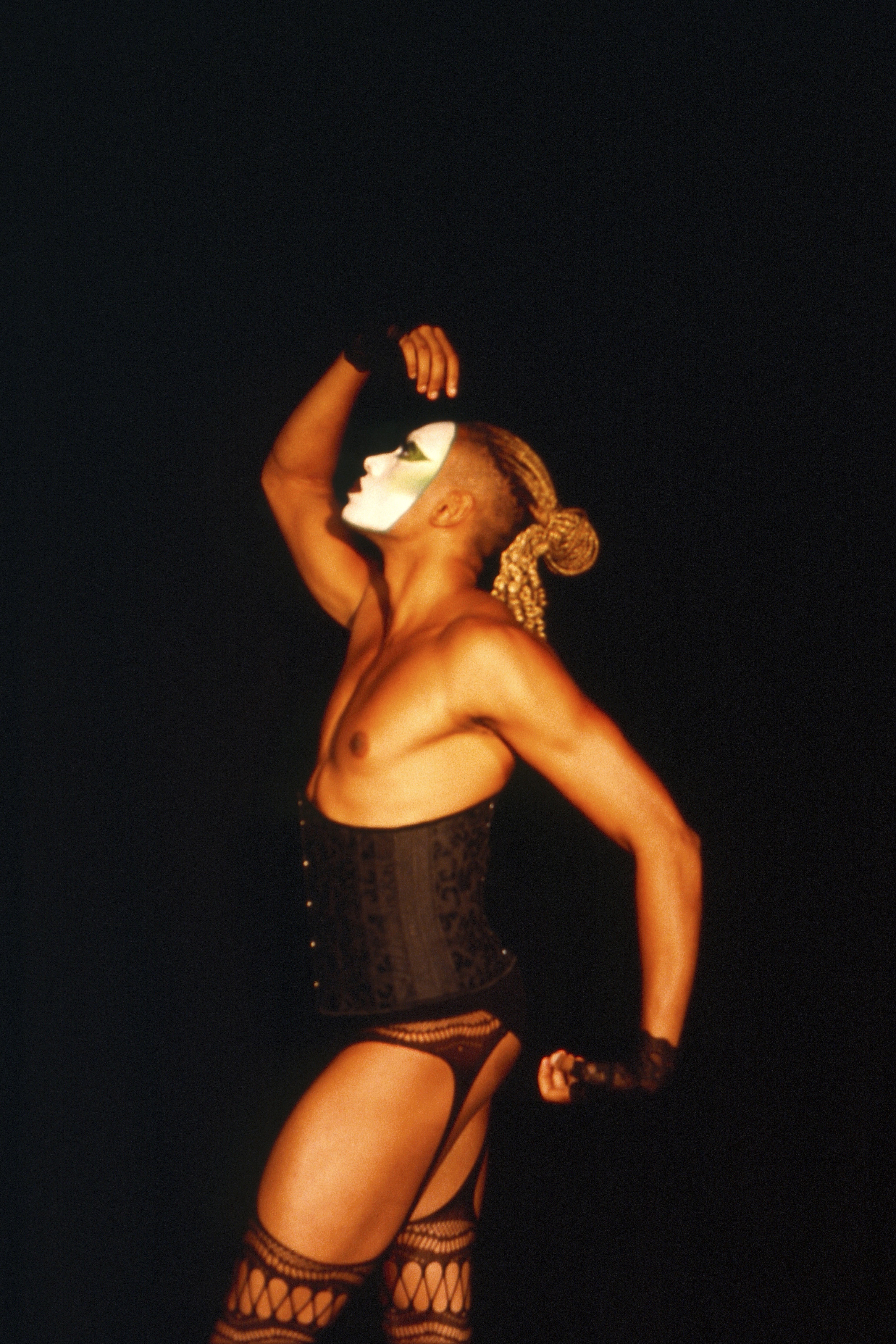
Lensed by Hudson Mona (@hud.mona)
Styled by Bryce Ray (@popstarbiitch)
MUA: Tommy Tafoya (@tommy_tafoya)
Photo Asst: Andy Roelofs (@andyxroo), Matt Stejbach (@mixed__greens)