

LUCAS GABRIEL WANTS TO BE A HIMBO
Bryce Ray, Lucas Gabriel
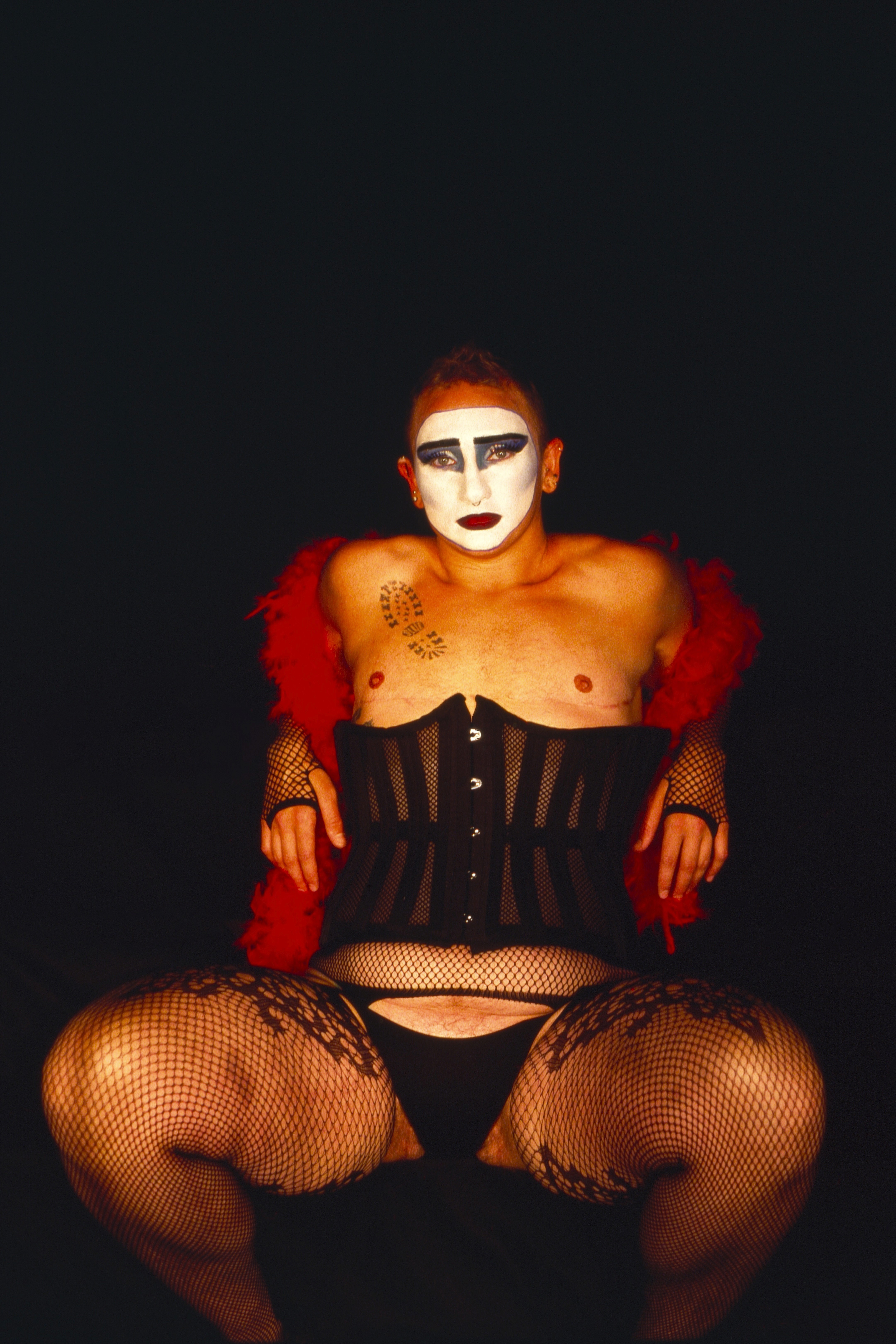
LUCAS GABRIEL WANTS TO BE A HIMBO
Lucas Gabriel lives life a bit like Superman. By day, they work as a technical director at a private school; by night, Luke considers themselves to be a bit of a freak in the sheets. Sometimes a video camera is involved. After moving to NYC from South Carolina back in 2018, Luke took their first shot of testosterone, changed their name, fell in love with leather, and found community amongst the kink and leather scenes of the city. Their work can be found at aortafilms.com, transnificent.com, and carved into queer skin across the five boroughs. Luke hosted us for dinner in their East Harlem apartment where we talked about Rocky Horror, growing up Catholic in the South, and why he thinks the kink community tends to get a bad rap.
BRYCE RAY: Okay, to start: what is your relationship to Rocky Horror Picture Show?
LUCAS GABRIEL: I don’t have a huge relationship to it if I’m being honest. I saw it for the first time as a live musical in college at a local regional theatre. Post college I’ve seen the movie a couple times, but I’ve never been to an actual midnight showing of it. I was going to go last year and then a friend of mine stopped dating someone in the cast, and…you know. [Laughs.]
BR: How would you describe Rocky Horror’s place in queer culture?
LG: I feel like it has a really complicated place - especially now in 2023 with trans issues and the whole idea of cross-dressing. The fact that they use the word “transvestite.” Trans people might use the word “tranny” nowadays but pretty much only amongst ourselves. So--I think it’s definitely complicated to look at from the lens of today, but as far as its place in history, it was kind of great for when it came out. Sure, they missed the mark and cast a cis man as a trans person, but it was 1975. They’re not going to hire a trans person at that time. It was such a sensation that people loved. It’s weird because it both fetishized and made a spectacle of queerness--something that could be considered both good and bad. Good in that people that were attracted to it were able to get positive things out of it; bad in that people that weren’t attracted to it found it repulsive.
BR: One way I like to look at it is how queerness is performed in regards to straight people. Rocky Horror became the cult sensation that it did because it was accepted by straight people. It’s like, why is that version of queerness palatable to you? You know what I mean? In the same way that you could ask, why is David Bowie palatable?
LG: Or even Lil Nas X. Though he’s a little more risqueé.
BR: He’s a little more risqueé, but the younger generations of straight people still listen to him. Probably more than queer people do. They’re still out here listening to “Old Town Road.”
LG: Yeah, I feel like Rocky Horror was one of the first large, mainstream depictions of a trans person in mostly positive light. Well, I shouldn’t say positive because he is a predator.
BR: [Laughs.] Right. He does rape and cannibalize and murder…
LG: But that’s very on track with how trans people have existed within pop culture and media in history. At the same, it was good in that this was--and still is--a character that people love. It humanized trans people in a way that was important for the time.
BR: And he is considered by pop culture scholars to be a kind of anti-hero because he has that cathartic moment at the end. I mean, he still does crazy things, but the writers allow you a glimpse into why he does it--to a certain extent. Plus, the things he does are part of the genre of the movie. They’re almost to be expected.
LG: Totally.
BR: Do you feel like you see yourself in the movie at all?
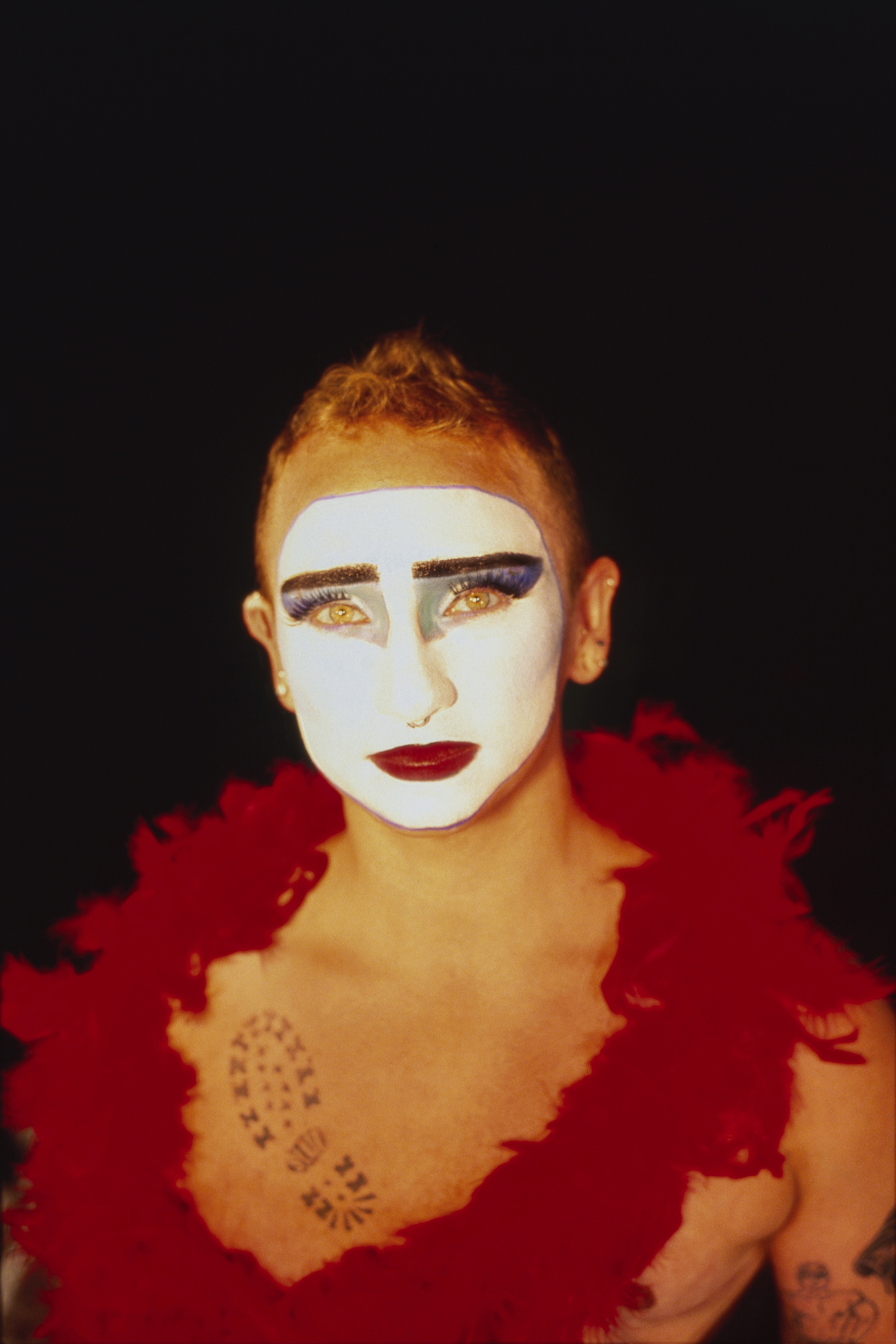
LG: That’s a good question. I have been told I could play Rocky. You know, the dumb himbo. So, like, it’s not exactly me, but I would enjoy cosplaying in that realm. Who doesn’t want to turn off their head and just go to the gym and look hot?
BR: Oh, to be a himbo!
LG: Exactly! I feel like that’s a fantasy version of myself that I can embody sometimes.
BR: Do you think you’ve ever seen yourself represented on screen?
LG: Honestly, no. I don’t think so. It’s a complicated question because I see facets of myself but not all of me. At least not in visual media. There are a couple books that I’d say told a story I could relate to. The first one being Stone Butch Blues [by Leslie Feinberg].
BR: I had a feeling you’d say that. I remember reading that book and feeling like I had a better understanding of you. You know, I feel like everyone lives their lives--to some extent--vicariously through other peoples stories and the myths that get passed down. We use them to romanticize our own lives. I read Stone Butch Blues and thought, okay, this is probably one way that Luke romanticizes their life.
LG: Oh, yeah. Definitely. I don’t think I can think of any mainstream representation of myself. Which I don’t think is a bad thing. Part of what feels authentically me is that I’m not represented in the media. And not even just me, but me as a person with multiple identities and communities. I don’t think I see my overall community represented.
BR: How would you describe your community? I know you’re big in the kink community. Is that community you’re referring to?
LG: Yeah. I’d say the kink community, for sure. It’s fetishized and just not represented well. There’s a handful of movies but everything I’ve seen recently is just bad. There’s that Netflix show Bonding. I don’t know if you’ve ever watched it, but it’s not good. I watched the whole thing, and it’s about this dominatrix with no idea what she’s doing. She doesn’t operate under consent.
BR: Is that a common misconception of kink? The lack of consent, I mean.
LG: 100%. Totally. People who aren’t into kink or BDSM, they don’t understand why or how someone could consent to doing these things. People pathologize kink like nobody’s business. I mean, is there something to pathologize? Yes, maybe. But so what. I could pathologize why we like and are eating black beans right now. Anything can be seen through this Freudian lens. People just choose sex because it’s sensational.
BR: And it’s taboo.
LG: And kink is the taboo sex. I don’t think outsiders think that someone can consent to it. People writ large think that kink is an abomination.
BR: How did you get into the kink community? I mean, did you grow up thinking these things about the kink community?
LG: I didn’t know what kink was growing up, so I couldn’t really have any internalized ideas about what it was. I didn’t have the language. I grew up in the South. Catholic. Christian. Abstinence. You get the picture. Sex was barely an option, so the idea of seeking pleasure out of sex was completely off the table. Further than that, seeking pleasure in ways that didn’t involve PIV sex was unthought of. I was totally removed from it. I started practicing kink a little bit at the end of college with things that most would consider spicing it up in the bedroom: fuzzy handcuffs or spanking a little bit. Once I moved to New York I started dating people who were more into kink as a lifestyle and less just something you do in the bedroom. I kind of just fell into the community. I was cute and friendly and I like meeting people and having community. I met this one dominatrix that I ended up being really good friends with, and she opened my world. It was like, oh, all of these things are possible. She introduced me to boots and leather, etc. It was just this one catalyst that then grew into more. Now, looking back, it makes sense. Before I even knew what kink was as a practice, I was doing kinky things. I would play with candle wax or needles. I’ve always been curious about what my body can do and how different things interact with my body. Kink is a place where I’m able to explore my creativity like no other. I feel like a little kid. You know, kink is often called play for a reason. It’s supposed to be fun.
BR: How do you see the role of kink playing in your life as you continue to age? Will you still be practicing when you’re 80?
LG: Oh, definitely. Kink and BDSM--
BR: Wait, can you tell me what the difference between the two are?
LG: I’m not sure I know a specific definition that is different, but I’d say, within the community, the delineation comes from people who practice and play with kink in their sex lives versus people who explore BDSM as a lifestyle. Kink is more like what I was doing in college.
BR: The little spice here and there.
LG: Exactly! BDSM is community. It feels very intrinsic to who I am. It’s a community that I feel that I can be completely myself around in a way that isn’t possible or realistic in other areas. It’s a lifestyle. For example, one of the ways in which I practice BDSM in my everyday life is through a partner who is my submissive. Everyday, all the time; it’s always our dynamic. I feel like there are a lot of misconceptions about 24/7 BDSM dynamics. Someone just yesterday said, I feel like it’d be totally overwhelming to have this dom, masc persona all the time.
BR: It’s more natural than that. It should be more innate.
LG: Right. You’re still a human. Just because I’m dominant and my partner is submissive doesn’t mean that I don’t have breakdowns and they can’t support me through that. It doesn't mean that I don’t get depressed or anxious and need support from my partner. It just means that we have protocol that we’ve negotiated. They take my jacket on and off. They put my shoes on and off. They order for me at restaurants. They keep a water bottle filled with cold water all the time when we’re together. These are things that make my life easier, and it is their genuine desire to make my life easier in whatever way they can. And these are things that we’ve talked about and negotiated. We literally have a note on our phones that we revisit and discuss as to whether or not certain things are still working or making sense for us. It’s very flexible. The beauty of BDSM relationships to me is the expressive freedom to have my relationships look however we want them to look.
BR: How do you balance kink with your everyday life? So much of this issue is about how we as queer people perform drag in our everyday lives: how are you performing drag when you’re outside of the comfort of the kink community?
LG: I absolutely feel like I dress in drag everyday. Going back to me being into leather, I was at a leather convention a few months back with a friend. We were packing to go back and we both made the joke, okay, time to put on our normie clothes! Guess I can’t just dress in a leather jockstrap and a harness all the time. [Laughs.] And then it hit me like, oh, yeah, I’m dressing in drag. I’d never thought about it like that. So much of my identity lies within leather and BDSM, so I feel much more authentically myself in leather than I do in everyday clothing. In my vanilla life and vanilla job, I dress in a button up and the people in that part of my life don’t see the other side of me.
BR: It’s like you’re Clark Kent.
LG: It does feel like that! And, obviously, it’s still me. It’s just not all of me. When I’m in leather and around the BDSM community--that’s when I’m able to express all of me.
*This interview has been edited and condensed for clarity and your viewing pleasure.
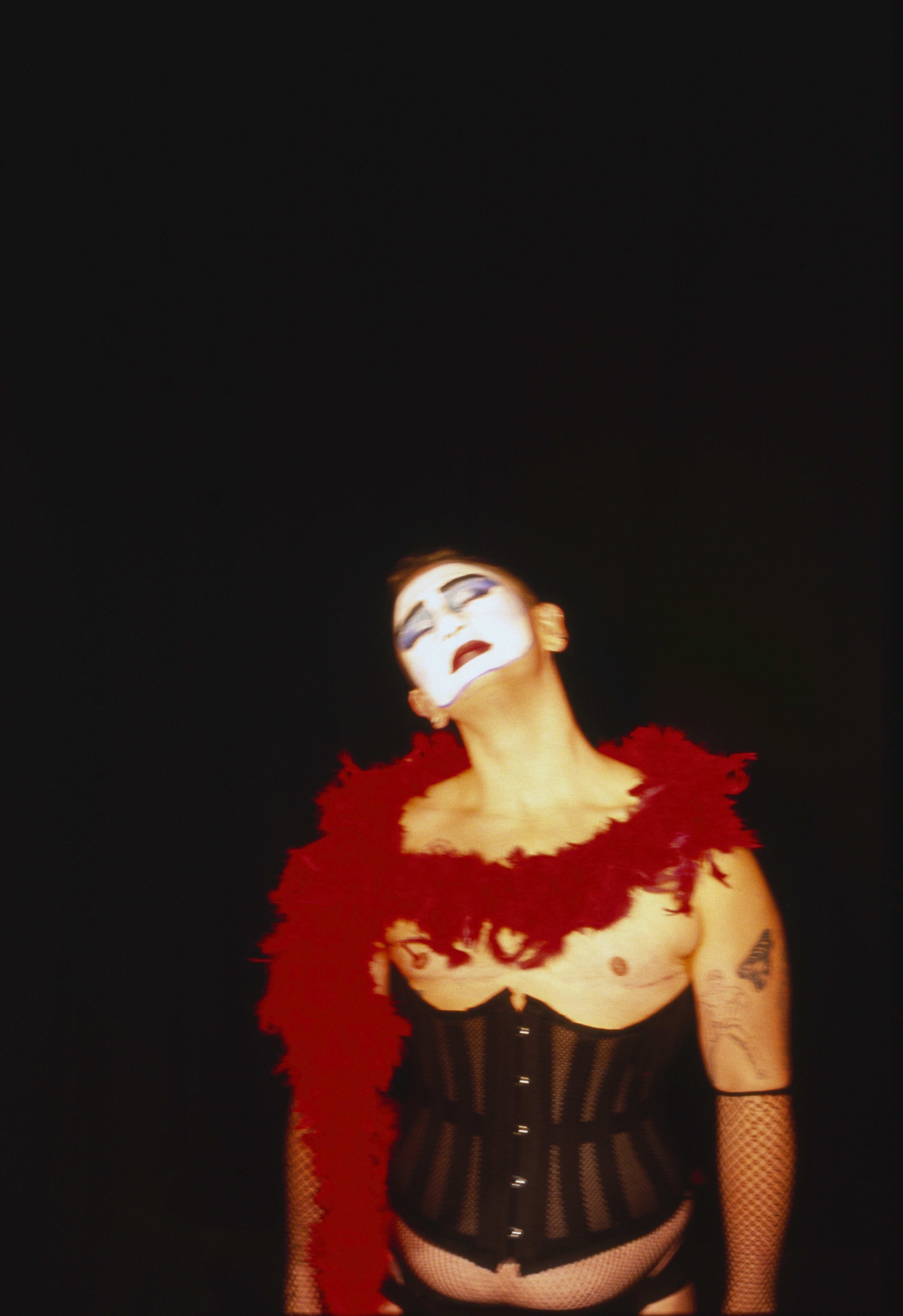
Lensed by Hudson Mona (@hud.mona)
Styled by Bryce Ray (@popstarbiitch)
MUA: Tommy Tafoya (@tommy_tafoya)
Photo Asst: Andy Roelofs (@andyxroo), Matt Stejbach (@mixed__greens)