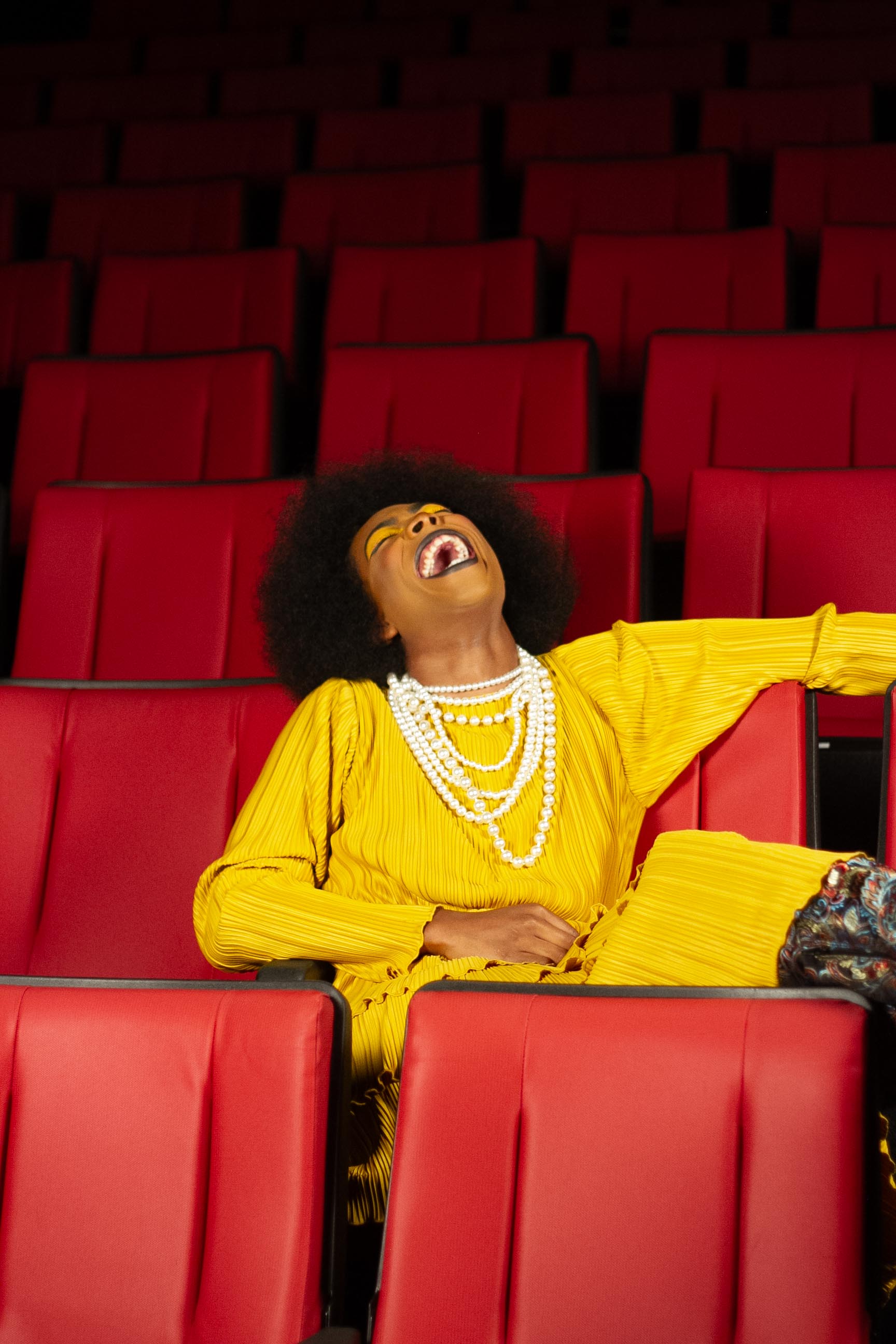
JUNIOR MINTT WANTS JUSTICE FOR GLITTER (2001)
Bryce Ray, Junior Mintt
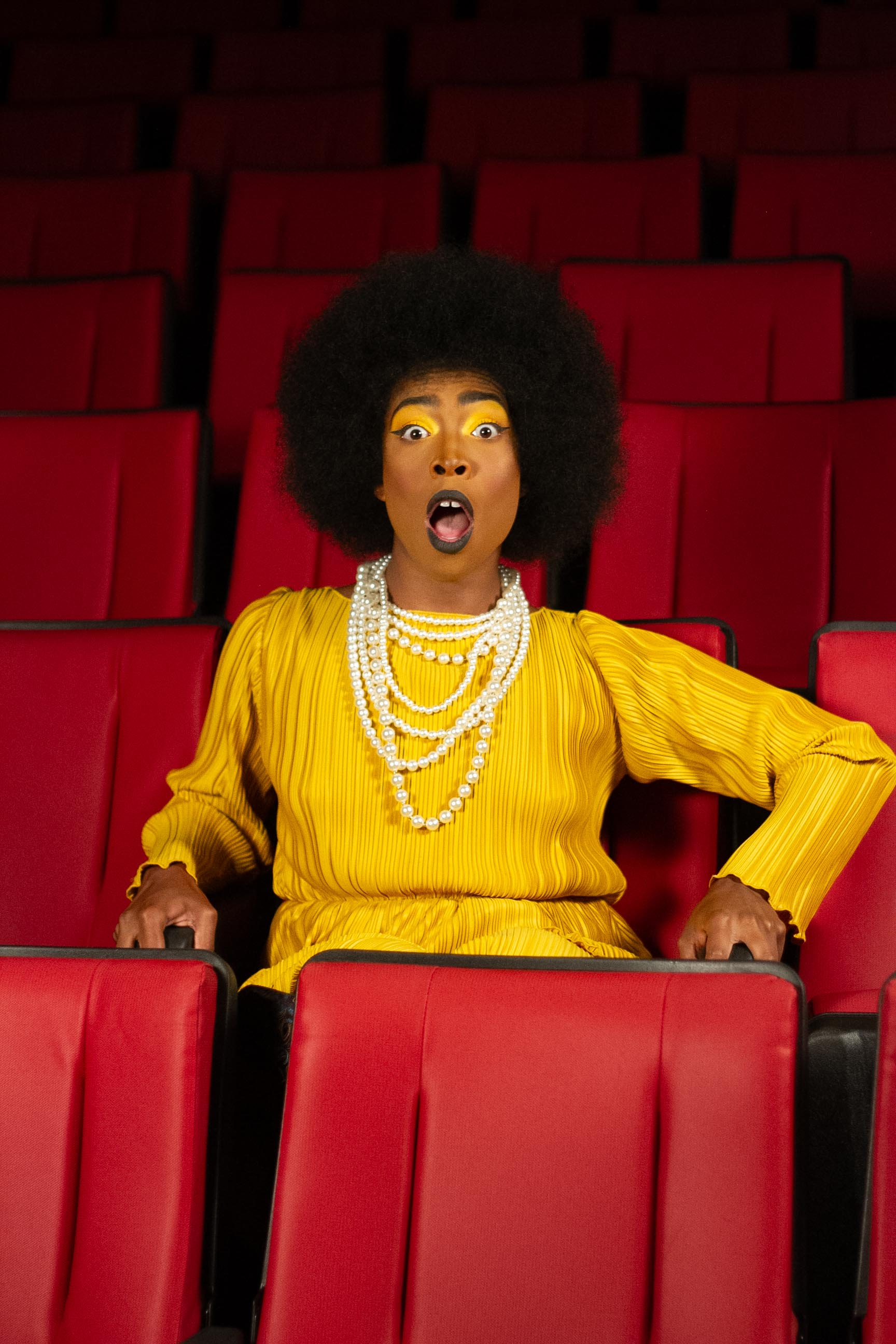
JUNIOR MINTT WANTS JUSTICE FOR GLITTER (2001)
Junior Mintt can do it all! A drag performer, activist, and entrepreneur, Junior Mintt is out to make the world a little more Mintty. Her makeup line Mintty Makeup is now on sale at over 650 JCPenney stores and has been featured in Vogue Beauty, The CUT, thrillist, ID, and Gayletter. She is a co-host of the Brooklyn Liberation March and the creator of her own talk show “The Junior Mintt Show” and her monthly drag show “In Living Color.” We met up with Junior Mintt in Bushwick for tacos to discuss cult films, her love for John Waters, and the drag performance that made her want to become a drag queen.
BRYCE RAY: Tell me about your relationship to Rocky Horror.
JUNIOR MINTT: Well--I first discovered it in high school. I think, in drama class. It was one of those classes where the teacher didn’t want to teach, so they threw on a movie. They put on Rocky Horror, and I didn’t really understand it at the time. I grew up around so many campy movies that I wasn’t reading too deeply into it--even during “Sweet Transvestite.” I remember having to look up what a “transvestite” was afterwards. I was very sexually attracted to Rocky. Is that his name? The golden man?
BR: Yes! The himbo to beat all himbos.
JM: Truly! I was like, okayyyy! I really loved the movie. Then as I got older and went to midnight movies and saw the whole culture around it, that was when I understood that it was actually an extremely, extremely queer film that speaks to a lot of the stereotypes that straight and cis people think of the queer community. I’m very much an admirer of it all. I love the chanting and everything during the midnight screenings. And to be there with a bunch of queer people and some straight people mixed in? That’s always the interesting part.
BR: I think that’s why it’s become such a cult phenomenon. Straight people have accepted it. It’s crazy when you think about it.
JM: [Tacos arrive.] Ooo, let me grab that hot sauce real quick! [Returns.] So, yeah. I would say that is my connection to Rocky Horror. It definitely gave me more language for queerness in a way that I had never had before.
BR: How so?
JM: Really it was Frank-n-furter. Frank-n-furter was someone with such non-binary energy. Knowing that the character is a cis guy dressing up in women’s clothing, his feminine mannerisms and everything, made me have this realization that, oh, women can come in all varieties and types and don’t have to present in a certain way in order to be treated like a woman. I should say my favorite depiction is Laverne Cox’s Dr. Frank-n-furter. When I saw her do it…
BR: You were finally seeing an actual trans woman in a role that was essentially written for her.
JM: Seeing her do it completed the image for me. To get to see the film progress into this way of being cast that is actually an exemplification of queerness? Yeah. I love Laverne Cox’s portrayal. It’s definitely my favorite version of it. And she did it live! Ugh!
BR: Why do you think the movie has been able to stand the test of time?
JM: I think because it depicts queerness in a way that’s not palatable to the majority of people--especially straight and cis people. That’s why at midnight showings you’ll see straight people, but they’re all from the punk and metal communities. They love Rocky Horror. I think it’s that dejected, undesired energy of liking something that others do not.
BR: That’s what makes it a cult movie. One of the big factors--with movies like Pink Flamingos (1972) or Showgirls (1995)--is that the people who love these movies know they were rejected by the general public. That’s what makes it good. You feel special for liking it.
JM: Mhmm. That’s me with Glitter (2001). One of the greatest movies ever created.
BR: Glitter is a classic! Have you seen that picture of the ad for Glitter right in front of the Twin Towers on 9/11?
JM: [Laughs.] Yes! That’s what breaks my heart. That movie could’ve been a hit. The movie and the album came out on September 11th. The universe really played in Mariah’s face.
BR: One of the most fucked up images I’ve ever seen. It’s so sad.
JM: But at the same time, Mariah’s everywhere. It’s iconic. To be a bad enough bitch to have an advertisement on the train. And you know what? Her name and that image are still getting around today. We love to see it. The category is inside job! Bush did it!
BR: [Laughs.] What are some other cult movies you love?
JM: Well, love Showgirls. Nomi Malone forever. That pool scene is iconic. Any John Waters film. Kill all humans! I love John Waters.
BR: Hairspray (1988) and Cry-Baby (1990) are two of my favorites.
JM: John Waters is one of my favorites because my mom was born in Baltimore in 1958, so part of my childhood was in Baltimore. To see those streets be filmed at a time when my mom would’ve been one of those kids on the street. It’s wild to think about. And I think John Waters has a very particular way of writing. He can seamlessly tell so many different stories authentically and beautifully. In Hairspray, some of my favorite songs are sung by the Black characters, and it’s like, How did you write this? Also, the original Hairspray, the remake, and the Broadway musical, all are phenomenal. You know why John Waters has a pencil mustache right? It’s an homage to Little Richard. Because Little Richard’s music was so queer. Like “Tutti Frutti” is about anal sex. John Waters and Divine would be listening to Little Richard and coming up with ideas, and Little Richard had the pencil mustache.
BR: To be in their circle? To go to Studio 54 and then be a part of the 80s art scene? A dream!
JM: You’re looking over at Grace Jones or Bianca Jagger. Diana Ross!
BR: I would just stare. You know today is the 40th anniversary of her Central Park concert?
JM: My mom was there! She was at a lot of cultural moments in the city at the time.
BR: Wait, so where did you grow up?
JM: We bounced around a lot. I was born in Philly, raised in Camden, New Jersey for about seven years, then my dad left and we bounced around Maryland, DC, Virginia. My family is from North and South Carolina originally.
BR: I have family there, too.
JM: There is something about the South. You know what you’re getting with them. In New York you could be dating somebody for six months and the next thing you know they’re like, yeah, I did vote for him. Like what? They’ll use your pronouns up here while voting against your interests.
BR: [Laughs.] How did you get into drag?
JM: In college I was an RA for three and a half years. I would watch that show The Soup (2004-2015). The one with Joel McHale. He’d be in front of this greenscreen going over the news of the day in this comedic way or whatever. That was the first time I ever saw drag on screen. I mean, I’d seen To Wong Foo [Thanks for Everything! Julie Newmar (1995)], but it didn’t really resonate or connect with me. I loved it, but it didn’t inspire me to do drag. But Joel McHale would feature clips from Drag Race, and I was like, who are these girls? When I first got to college is when I first started watching Drag Race. I was obsessed with Bob [the Drag Queen]. Bob was an activist and was funny and had so much confidence. She was so authentically Black, and I wanted to be her. The first thing I wanted to do when I then moved here was go to a drag club. I always say that, when I loved here I was looking for a “Paris is Burning” (1990), but what I really found was a lukewarm Berlin. [Laughs.] It was not it. The audience was a nuisance. It felt like they didn’t want to talk to you. Then I got deeper into Brooklyn drag and I was like, ohhhhh!
BR: That’s where the girls are actually at.
JM: One of the performances that made me know that I really wanted to do it was Shanita Bump. An amazing, amazing drag queen. I saw her at Bazaar Bushwick before it closed. I used to go all the time because it was Sasha Velour’s home bar. Shanita Bump comes out in a full-body latex catsuit--with a ball of yarn, a cat tree, and a litter box onstage--and does this number as a cat. Half-way through the number she unzips the crotch of her suit, and she had been holding douche water in her ass and squirts it out into the litter box. [Laughs.] I was like, you can do that? The audacity! The fact that she held it there. I didn’t know you could do that. After I saw her and some other amazing performances, I signed up for the Hot Mess competition at House of Yes. It was one of the wildest experiences. I remember I walked in--I had my full afro and everything--and the first thing somebody said to me was that I looked like Angela Davis. It was the most affirming thing I’d ever heard. Before I was about to go on, my best friend was screaming their head off, so they invited them onstage to introduce me. It was amazing. I didn’t win, but two producers were there that night and booked me for gigs. I’ve been working ever since.
BR: How has it changed for you since then?
JM: My drag? You kind of just get comfortable. I feel like whatever I do on that stage is going to be the right thing. I’m not overthinking anymore. You know your strengths and your weaknesses and when to play to which one. When it comes to the drag scene, it’s more the scene that I wished I had found when first came here. It used to be that I would be the only Black trans queen performing in a show. When I started In Living Color [Junior Mintt’s drag show.], there wasn’t another show in New York produced by a Black trans woman. It was literally just me up in here. There wasn’t a community for performers that weren’t cis drag queens.
BR: Is that what inspired you to start In Living Color?
JM: In Living Color came out of being tired of what I could and couldn’t do in a space. I remember doing a show and getting the mic to say something after my number. I said something along the lines of Black Lives Matter, and the producer and bar owner came up to me after saying that I was bringing the energy down. I was like, acknowledging that my life matters is bringing your energy down? I was the only Black trans person in that room. I just want people to be able to find themselves and understand themselves better through this--whether it be on or off the stage. We’re all being vulnerable up in this bitch. The scene was rough. Now we have actually queer-owned venues--like C’mon Everybody, All Night Skates, and Good Judy--that actually pay performers what they deserve to be paid. The scene is nicer. It’s weird now to be like, I guess I was kind of part of the reason it changed. It’s very weird.
BR: That’s got to feel so affirming.
JM: I just want people to say that things are better because of me and the work that I do instead of saying that it’s worse.
*This interview has been edited and condensed for clarity and your viewing pleasure.