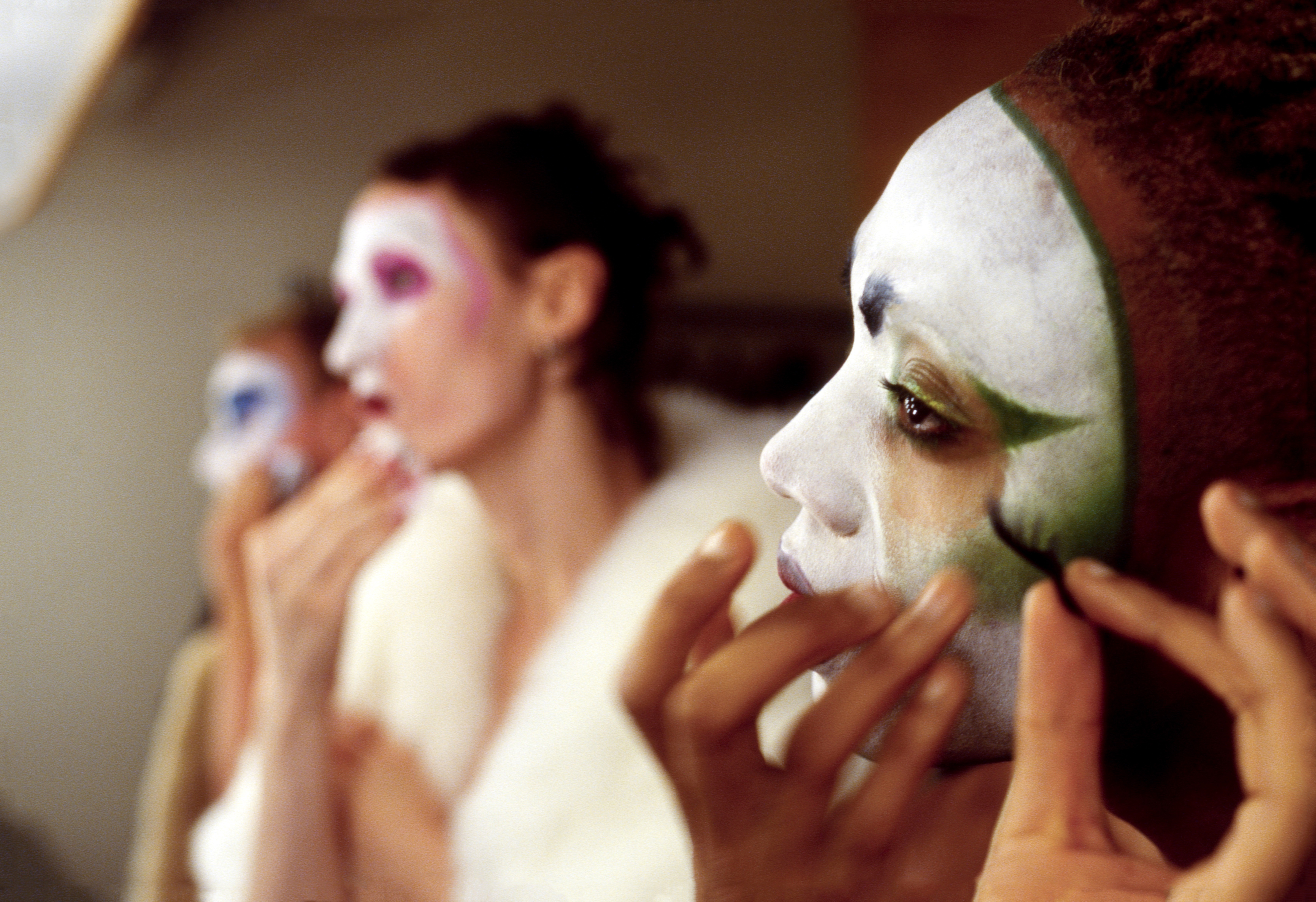
SWEET TRANSVESTITE!
Bryce Ray
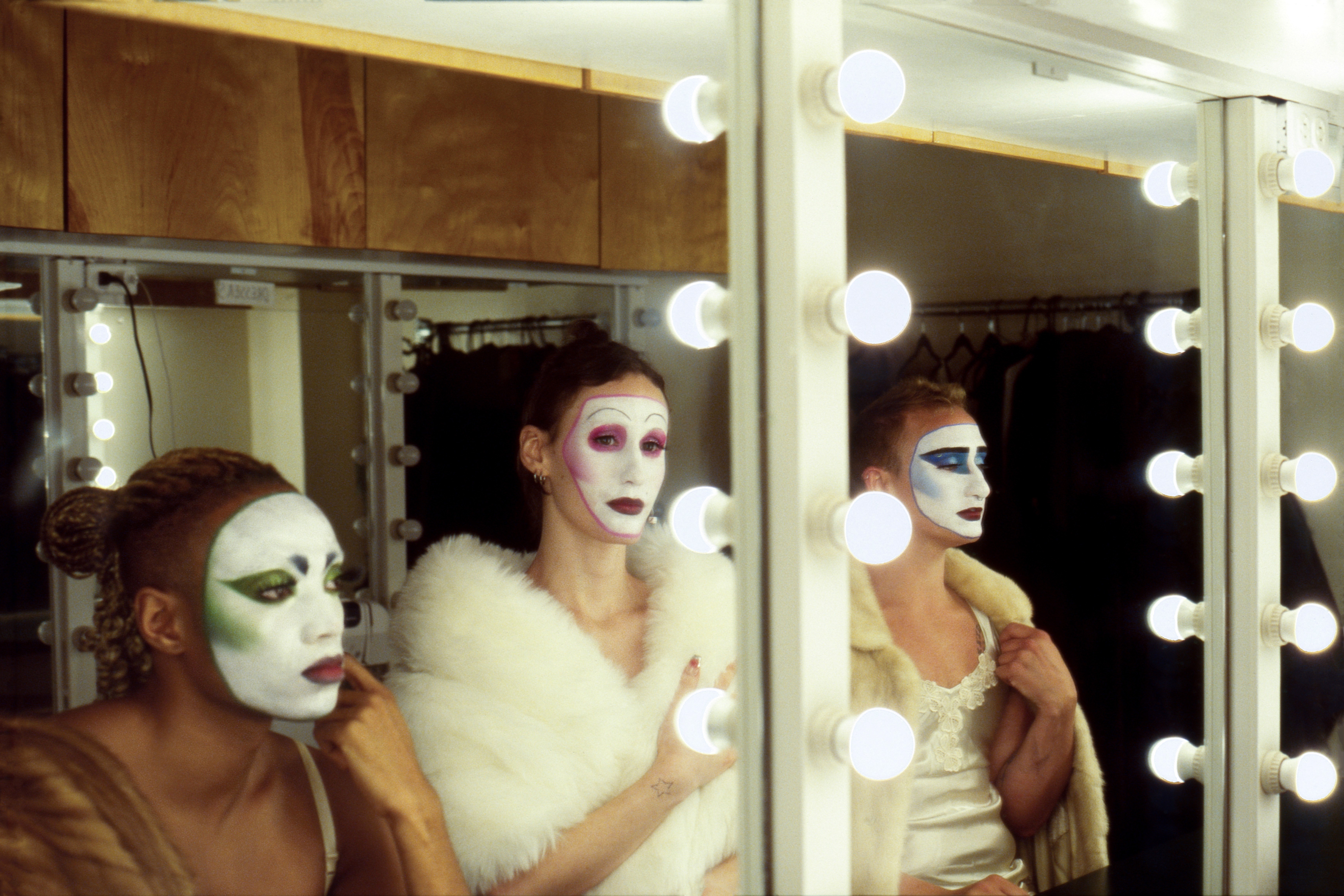
SWEET TRANSVESTITE!
In 1975 Donna Summer performed her 1975 disco hit “Love to Love You Baby” for the first time, and the crowd went absolutely wild, ripping off their clothes, bras and underwear soaring onto the stage, Summer’s soprano oozing over the microphone. What inspires a crowd to lose control like that? Well--drugs, for one. But something about Summer’s sexually charged performance struck a nerve.
That same year, the movie adaptation of The Rocky Horror Picture Show flopped at the box office.
That is until the next year when a small Greenwich Village theater began hosting weekly midnight showings where rowdy audience participation became not only welcome but customary.
I’ll admit, I’ve never been to a midnight screening of Rocky Horror. I mainly know the movie from cultural references: Fame (1980), That 70s Show (2000), The Perks of Being a Wallflower (2012). Its ephemera has somehow stood the test of time and garnered it the badge of “greatest cult film of all time.”
I first learned of Rocky Horror--at least I think--from the Rocky Horror episode of Glee in middle school. I remember being turned on by Chord Overstreet as Rocky in those little gold briefs. But that’s neither here nor there, I suppose.
In 1969, the first brick was thrown at Stonewall Inn in Greenwich Village, signaling the so-called beginning of queer liberation. Is it a coincidence that Rocky Horror found its present form mere blocks and years away? Perhaps.
Rocky Horror first premiered in London in a tiny studio space above the Royal Court Theatre. After a sold out run it transferred to the West End. And then Los Angeles, and so on. A movie felt like the natural progression.
Featuring a cast of soon-to-be stars (Tim Curry, Susan Sarandon, Barry Bostwick, Meatloaf), the rock movie musical followed the path of all cult films to come before and after: bad reviews lead to bad box office leads to a small following discovering the film later and taking pride in liking something that no one else does. It becomes something akin to listening to your favorite album over and over again. Can a film still be considered of the cult variety if it’s beloved by millions, its iconography all over the walls of pop culture?
I’m once again thinking about the Rocky Horror episode of Glee. In particular the scene in which Emma and Mr. Shue sing a lusty “Touch Me,” and Emma has Mr. Shue strung out over a desk, one hand pulling his tie, the other clutching his hairy chest.
The Rocky Horror Picture Show is essentially a rock musical spoof of 1950s sci-fi B-movies with gothic horror elements. It follows a very straight-laced honeymooning couple, Janet and Brad (played by Susan Sarandon and Barry Bostwick, respectively) as they roadtrip across the Midwest to announce their betrothal to an old teacher. When their car breaks down, the couple seeks refuge in Dr. Frank-n-furter’s castle, the secret headquarters of the Transexual Transylvanians, a group of aliens hailing from the planet Transexual in the galaxy of Transylvania. (Read that last bit again for clarity’s sake.) The couple arrives at the castle just in time to witness Dr. Frank-n-furter (Tim Curry) unveil his ultimate Frankenstein-ish creation--Rocky, a muscled and tanned himbo resembling Hollywood’s version of Michelangelo’s David.
Now, I’m remembering Chord Overstreet again. Those little gold briefs…
From there, this square nuclear couple is taken on a musical odyssey of pure sex and hedonism that strips away their 1950s Eisenhower-esque exteriors to reveal their most carnal and queer desires. Throw in the rape, murder, and cannibalism, and you wonder why the film flopped at the box office.
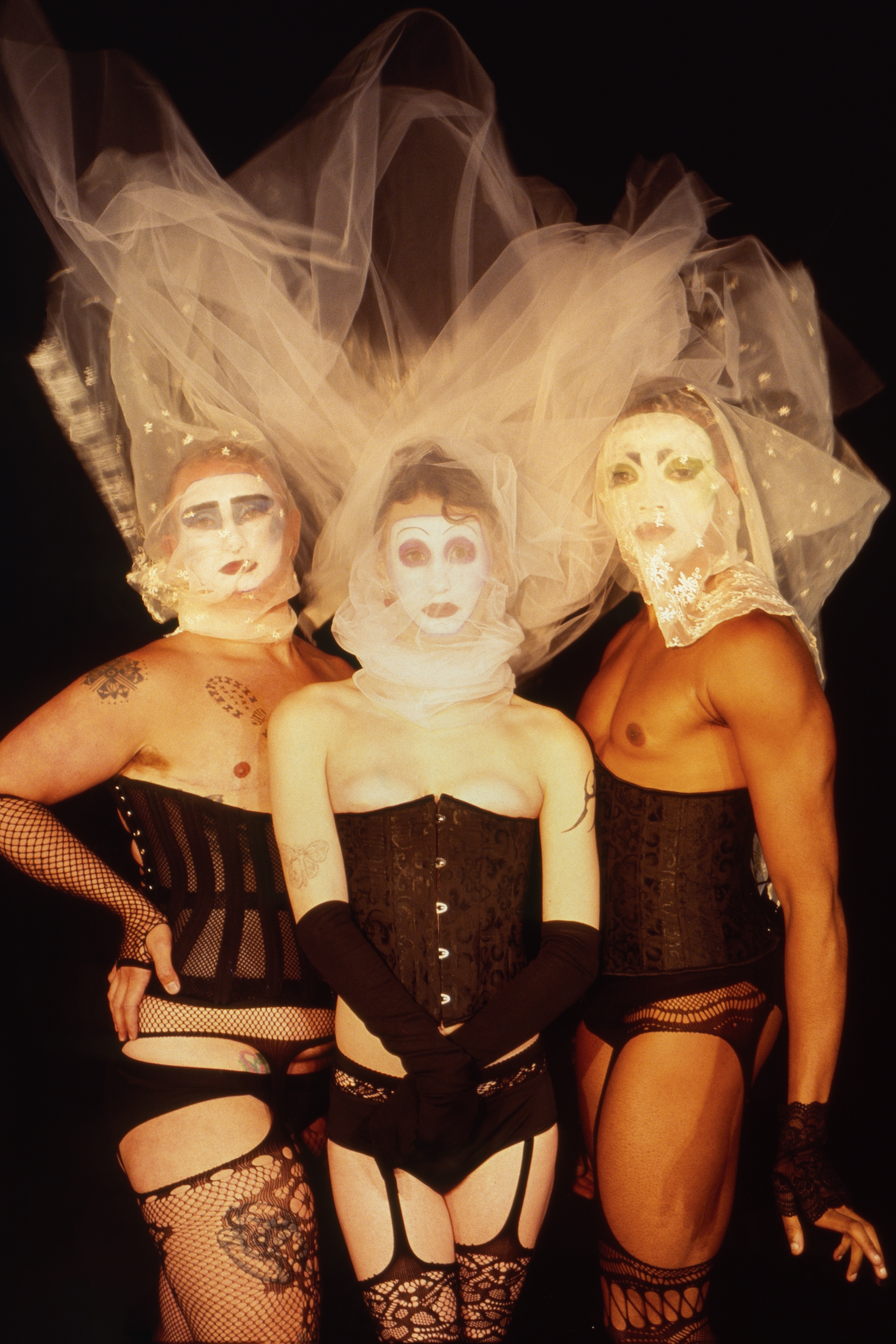
The phenomenon of Rocky Horror is more than the movie at the crux of it. Roger Ebert wrote that, “The Rocky Horror Picture Show is not so much a movie as more of a long-running social phenomenon” because “the fans put on a better show than anything on the screen.”
When midnight screenings of the film began at Greenwich Village’s Waverly Theatre (mere blocks away from Stonewall Inn, as you might recall), a weekly ritual began--a church for the misfits and counterculture, the eucharist likely to be hurled at the screen. A shadow cast began to act out the scenes below the screen, dressing up as the characters and becoming the true spectacle. Other fan rituals began to spring out: a call out here, a clever quip there, toast thrown at the screen when one character proposes a toast.
Recall: Donna Summer’s “Love to Love You Baby,” bras and underwear flying through the air. Sex. Drugs. Rock n’ roll. 1970s. Stonewall. Queer liberation. Are you seeing the connection?
Other fan rituals: a virgin auction at the beginning of the show, the snapping of rubber gloves when Dr. Frank-n-furter first dons his lab coat, the throwing of playing cards at the line “cards for sorrow, cards for pain,” rice thrown during the wedding scene (of course), the shooting of water guns during the song “There Is A Light,” a newspaper placed overhead as Janet does the same onscreen. The list goes on.
Calling Janet a “slut;” calling Brad an “asshole.”
Many of these fan rituals serve to both ridicule and celebrate what is happening on screen. In particular, the callouts only serve to further the anarchic themes of the film. It’s okay to call Janet a “slut” and Brad an “asshole” because they are indicative of the establishment--conservative, square, and virginal--everything that the film seeks to stand against.
The anti-establishment values of Rocky Horror are mere echoes of the queer people and aesthetics permeating the film. Queerness has always been a rebellion because its very existence stands against the black and white conformity that the establishment tries so hard to hold on to. To be queer is inherently anti-establishment, and Rocky Horror is nothing if not that.
For nearly fifty years, queer people--and straight people (can’t we have anything?)--have found solace in Brad and Janet’s madcap descent into sexual hedonism and queerness at the hands of Dr. Frank-n-furter and his transexual aliens. We delight in seeing this strait-laced couple experience sexual liberation in spite of or, perhaps, because of the politically incorrect methods taken to get there. In many ways, their journey echoes our own queer journeys from resistance to acceptance and a wildly good time.
Is it a coincidence that my watching Glee in seventh grade is what prompted me to tell my mom that I’m gay? Pop culture has always had more of an effect on us than we’d like to admit.
At the center of it all is Dr. Frank-n-furter. Complete with fishnet stockings, pearls, and a full face of makeup, Frank is the first time many viewers had ever seen anything resembling a trans person on screen. (Of course, it’s important to note that in spite of the character’s gender identity, the actor portraying Frank, Tim Curry, is neither trans nor queer, but we’ll get into that later.) Frank is bawdy and raunchy. He is a rockstar in every sense of the word--calling to mind the likes of David Bowie and Mick Jagger.
Side note: As lore would have it, David Bowie’s first wife, Angie, is said to have made the first ever call out when she yelled “No! Don’t do it!” at the screen, as Riff Raff threatens to zap Frank with a laser gun towards the end of the film.
In Frank, we see a queer person reveling unadulteratedly in their queerness--a revolutionary thing to see represented on screen even in today’s climate. Tim Curry as Dr. Frank-n-furter stirred feelings in people that they weren’t prepared to have. Before Rocky Horror, the image of a cis man in traditionally female attire and makeup was seen as something to mock or laugh at. Rocky Horror allowed people the taboo feeling of sexual attraction towards a character living outside of the gender binary.
To look back on a character like Dr. Frank-n-furter from a 2020s perspective is to be met with something like nostalgic disappointment. On the one hand, Frank helped thousands of queer kids realize their sexuality--maybe even a few straight, too; on the other, Frank, as a character, falls prey to many of the bad transgender stereotypes that have permeated pop culture since gender was a construct. I mean, he’s a homicidal cannibal who rapes two people. That’s not exactly great representation by any standards. However, Frank isn’t a villain because of his gender identity; he’s a villain because he murders, rapes, and cannibalizes. It’s a part of the genre. His gender identity is merely the cherry on top, serving to further outrage the establishment the movie is lashing out against.
He’s also a transgender character played by a cis-hetero man--a fact that, without the context of the times, sends many liberals into fits of performative woke panic. The film came out a mere six years after Stonewall--the beginning of a movement that is still largely exclusionary of trans people to this day. To even have the character refer to himself as a “sweet transvestite” was subversive and shocking. To have an actual “sweet transvestite” play the role would’ve caused the film to have never been made.
Further context: the Watergate scandal, Margaret Thatcher on the rise in England, the Vietnam War, Microsoft is founded, and homosexual activity is deemed legal under US law.
Does it help if the creator of Rocky Horror is nonbinary? Richard O’Brian (who plays Riff Raff in the movie) has often described themself as “70% male and 30% female.” Perhaps that’s beside the point.
It all comes back to Dr. Frank-n-furter: villain or anti-hero? When it comes down to it, Rocky Horror is the story of a transgender alien in search of acceptance. He’s gone from planet to planet to find a home and been met with rejection. On Earth, he discovers how to create life and subsequently creates the male ideal. In doing so, the cisgendered ideal is made into Frankenstein’s monster, and the transgender subject achieves control over gender and sexuality. After Frank dies at the hands of his transexual alien subjects, the film ends, lamenting about Earth being “lost in time, and lost in space/and meaning” without the transgender anti-hero.
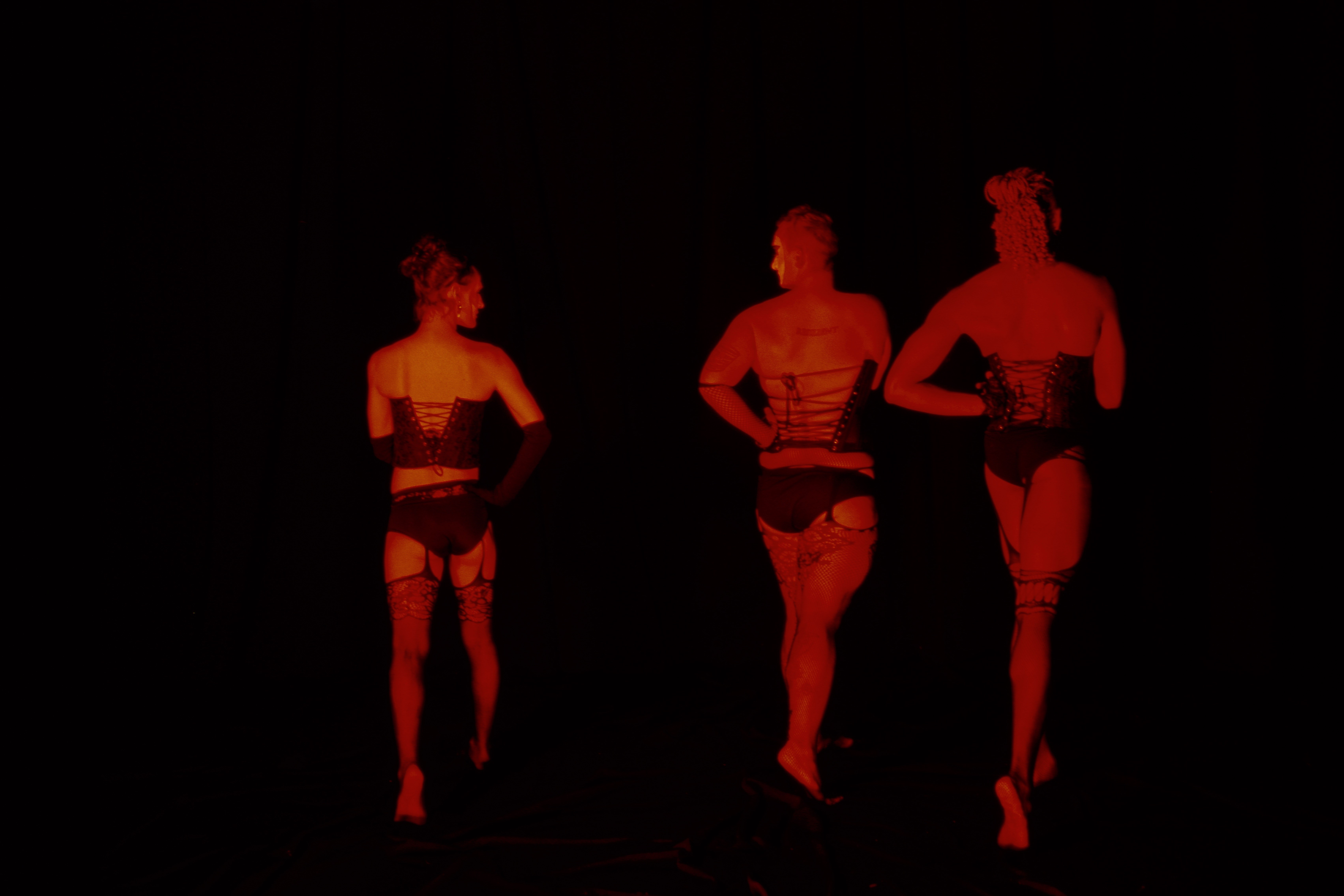
Rocky Horror is both a question and an answer—reactionary and revolutionary. It is at once a reaction towards the gender conforming nuclear family (Brad and Janet) as it is a parody of queer sexual inhibition. When Brad and Janet first arrive at the castle, they are shocked by Frank and his friends. In fact, it seems like Frank and friends are intentionally trying to scare the straight-laced couple. They put together a genderfuck horror show tableau that is fueled by sex and queer angst. The whole movie feels like a parodied indictment of the ways queer people interact with straight people and vice versa. While queer people get luxuriate in watching this straight-laced couple get their cherries popped, straight people get the horrific thrill of watching people like them get to be bad for one night. Much like its transexual cast of characters, Rocky Horror is a film that lives outside of any kind of binary—whether it be gender or sexual orientation, black or white. It’s neither good nor bad in its depiction of queer characters. It was and is revolutionary regardless of any added modern context.
These messages extend well beyond the film. As you now know, Rocky Horror is not just a film, it’s an experience. The midnight showings turned the film into a culture steeping phenomenon. Outcasts, freaks, queers, and those that simply liked to feel like the underdog, found solace in the initiation and ritual of the midnight showing. From being branded as a virgin on your first night--bright red “V” on your forehead--to mastering all of the various gags and callouts that occur throughout the night, indoctrination into the church of Rocky Horror is not unlike the second adolescence that occurs when a queer person finally finds refuge and community amongst other queer people. To be a queer person finding liberation through the acceptance of their queer peers is mirrored in the acceptance a Rocky Horror attendee might experience at one midnight showing.
“Don’t dream it, be it” is a line from the film that I often find myself referring back to. Don’t dream it. Be it. It’s an enticement as much as an instruction. Frank encourages the audience to give themselves over to “absolute pleasure” of being fully themselves--of being different. He’s offering a guidebook on how humans can and should live their lives. It’s a way of living that is completely at odds with the establishment's vision of how a person should conduct their lives. It’s a queer way of living rooted in a person truly understanding and accepting themselves for who they are. Dr. Frank-n-furter is providing a taste of how sweet life could be if we all learned to live a little more