

MICHAEL & STEPHEN ON BEING A TRUE NEW YORKER
Michael Sugarman, Stephen Michaels
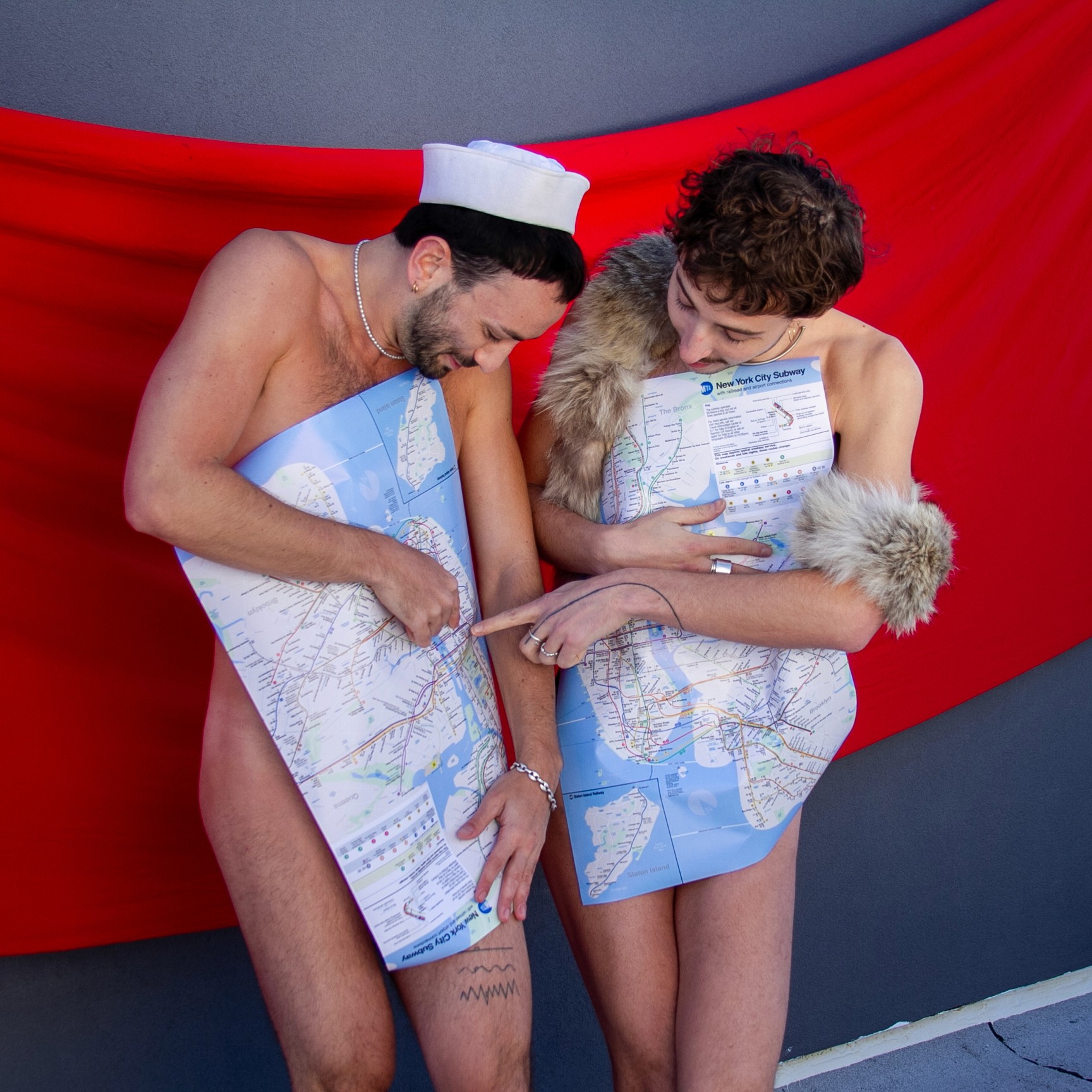
MICHAEL & STEPHEN ON BEING A TRUE NEW YORKER
Michael Sugarman and Stephen Michaels are both sculptors from the Upper West Side. After meeting through an ex-boyfriend the two quickly realized that they had a lot in common. Years later, the friends got together to tell us about growing up in the city, New York’s art scene, and why New York can never really be over.
STEPHEN MICHAELS: Anyway, what were you saying?
MICHAEL SUGARMAN: You know, whenever I tell someone I’m from New York, their first question is always, like, what was it like growing up in New York? But, to me, that’s just my life. I don’t know anything else. To me, this is normal. I feel like I would have more to say if I were from somewhere else.
SM: My typical message is that there is no reason to gate keep New York. It’s for everyone. It’s challenging to incorporate lots of new and loud, contant voices, but I sympathize with people who come here looking for a way to fulfill their dreams. That’s just not our M.O. because we don’t really have any other option. I’m not really here for a reason, nor do I have a vendetta to prove my existence here. I don’t really have anywhere else in America that I would go naturally towards without fully jumping ship. Most of what I know is here.
MS: That’s kind of the good thing and the problem about New York: it ruins you for anywhere else. Sometimes it’s awful, and you want to leave and have a totally different experience; but no matter where you go, you’ll always be comparing it to New York. Everywhere else will come up short in some way.
SM: I don’t really know where else I would live. My uncle moved to Europe after college and fled the city forever--which is sort of an interesting precedent for me--but I don’t really know if I want to do that. I like the idea of walking around one day when I’m 100 years old and someone stops me on the street to ask where I’m from and I get to respond that I’m a fourth generation New Yorker.
MS: I’ve lived in New York for 80 years!
SM: [Laughs.] I’ll be some old faggot at the Chelsea Flea Market shopping for vintage fur till I die.
MS: You’ll be in the Chelsea Flea Market selling vintage furs at some point.
SM: Honestly, I’ve really considered that as a pathway. [Laughs.] How do you feel about being an artist in New York? It’s kind of the center of the art world.
MS: That’s kind of the thing about New York. It’s the center of so many different worlds. As a result, it’s great but also awful? Because it’s where everything is happening--it’s exciting and there is alot going on--but there is also a lot more competition. And a lot more bad art.
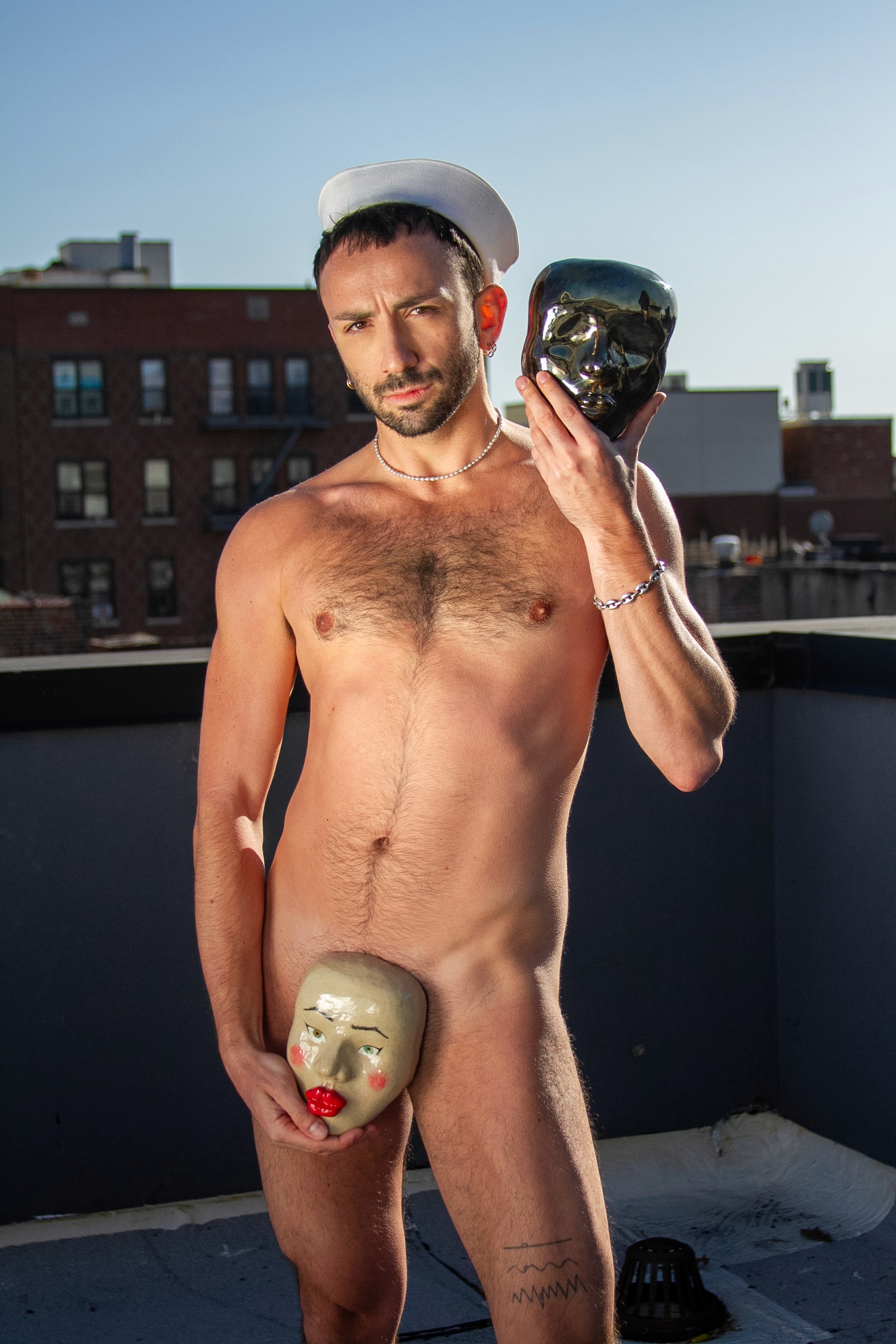
SM: Even though we have dreams and ambitions and would like to be successful, I do feel sort of outside of the “art scene.” Perhaps that has more to do with my feelings about the capitalist art structure… I also moved my day job away from working in art to working in design. Anyway, one thing about New York that I really appreciate and try to make time for is our access to art. I really think it’s a shame that most galleries are free, but nobody really engages with them unless you’re in the art world or have something at stake with it.
MS: For as much good, there is bad. And vice versa. Then multiply that tenfold. [Laughs.] Everything is exaggerated. There is so much incredible art, but the art scene across the board is shitty for financial and political reasons. It can feel like all the worst is here when really there is just so much more of it.
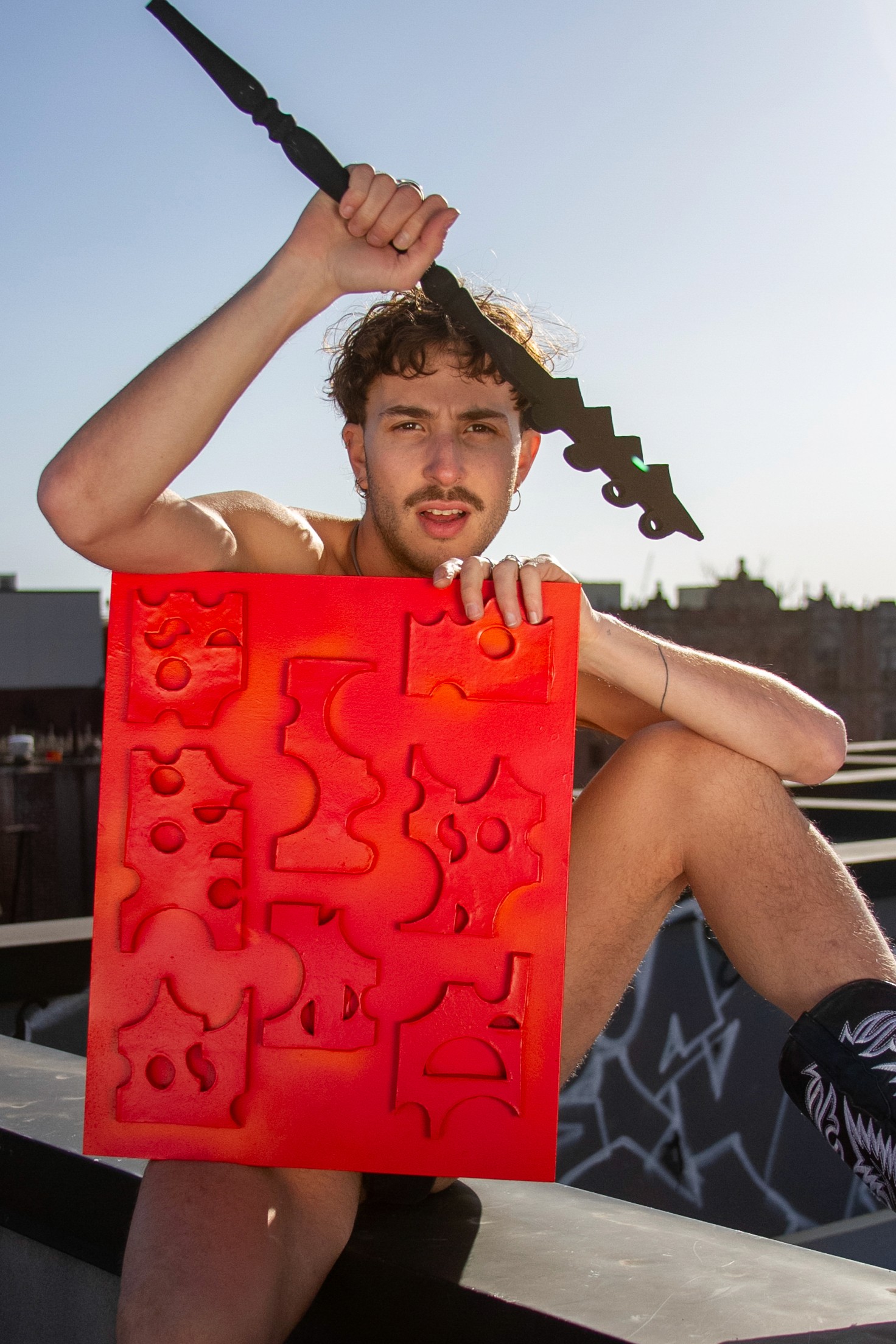
SM: I’m trying to maintain a sense of separateness from it. Not isolation, but a respite from how contemporary New York is. I like that you can escape into your own reality. I don’t know. I’m not really sure who I’m making any of this stuff for. I think it’s funny to make sculpture in New York when no one has any literal space for it. That’s been a big challenge for me. It’s hard to ask people in the city to hang a big sculpture on their wall when no one has space for it.
MS: Totally. It’s hard to bridge the gap. There is such a large class divide. The people who are inspiring our art are not the people who are going to be buying it. I wish it were a more level playing field.
SM: You have to value your labor, but at the end of the day you just end up hoarding a shit ton of objects in your apartment that no one is buying. That’s just how it goes. I’m grateful to have a space in the city at my studio that is just for me.
MS: Everyone is always saying that New York is dead, that New York is over, and in the same way that New York can never truly be dead, it always is a little over.
SM: It’s a reflection of the world in a way. New York holds up a mirror to the world, and the world is grotesque right now in a lot of ways.
MS: I also think a place with so much culture and so much turnover is always going to be looking back at what came before and saying, that was so much better and things are worse now. At the same time, there is always something new bubbling up. The past has to die and roll over to make room for the future.
MS: It can be so easy to give into those feelings of dread and death and New York is over. Because, in a lot of ways, it feels like it is. Everyone is feeling a little weird right now. It’s palpable. You know, it can be easy to get yourself really down, but I think it’s important to find inspiration in the city and appreciate where you are. Treat everyday like a romcom. Being an artist, having an outlet, having a space, it helps a lot. It gives a way to channel it all. And people are excited! Whenever I tell people about what I’m making in my studio, people are legitimately excited about it. They see something there.
SM: I feel like I’ve really changed my relationship with it. During covid, I really tried to market myself a lot more. I was much more interested in making some sort of brand or brand identity, and I think that was easier when everyone had unemployment money and wanted to decorate their apartments. After a while, I sort of lost interest in that side of it, and it’s been really liberating. I’m making weirder stuff, and I’m not really sure what it is or where it fits. In New York, at least, I can walk around and find the inspiration that will help me make the connection to hopefully figure out where this shit belongs. It’s a self-directed project to make art, and there are a lot of things in New York that will encourage you to not spend the time doing that. It’s a challenging thing to push through. Some of the best art comes out of being bored, and no one likes to be bored in New York for very long.
MS: On a different subject, do you think New York is an inherently queer city?
SM: Yes!
MS: Yes and no. I think it’s really easy to get lost in our little echo chamber.
SM: Of course, but I do think that it’s a city that encourages individuality and eccentricity. Everyone has varying levels of safety in that, but there is a certain freedom and liberty that you couldn’t even get in any other beautiful city. I always like the idea of style as a style. I think that’s a big part of New York.
MS: What sets New York apart from a lot of the other world capitals is the grit and dirt and mess and silliness that it has. Paris or London or wherever take themselves a bit more seriously.
SM: It’s funny how American New York is. We all feel how we do about this country, but New York reflects the best and worst of it. I believe in serendipity and magic. I think we should all be grateful for what we can build together and focus less on individualism that doesn’t feel cathartic. That’s the best part about making art. It’s the type of individualism that feels really good and can connect you to yourself. In terms of everyone being focused on their career, growth, goals, what have you, I’m grateful to have what feels like a productive version of that individualism.
MS: What’s been feeling a little sad to me about New York lately is that everyone is focused on doing their own thing in a way that feels a little anti-community. Like I said, I think everyone is going through a rough time right now, but everyone is sort of shrinking inwards instead of trying to create a safety net and community around them. That’s what New York is about at its best. Even people you don’t know are your neighbors. There is warmth hidden behind all the grit, and I think that’s what sets New York a part. It feels like we’ve lost that a little.
SM: I’ve been lucky enough to fall into all of the most amazing parts of my life because of New York and the randomness of how everyone is connected to each other. Knowing that at any moment I could meet someone who is going to enter my life permanently and bring something new into my life, I try to lead with openness and understanding that everyone has a reason for acting the way that they do. It is a hard time right now, but I think there is a way for us all to get on the same page with each other and stop all the ketamine dissociation. [Laughs.]
MS: Especially when people move to New York, I think they have this idea that being a New Yorker is all about being cold and strong and invincible, but it’s really the opposite. A true New Yorker is really vulnerable in a way that allows them to be in touch with the people around them.
SM: Treat strangers like friends.
MS: It’s in the infrastructure. I think that’s what is unique about the city. The city is a presence in all of our lives in a way that I don’t think other cities are for those that live there.
SM: It’s an identity in and of itself to live here.
MS: New York is another character on the show!
*This interview has been edited and condensed for clarity and your viewing pleasure.
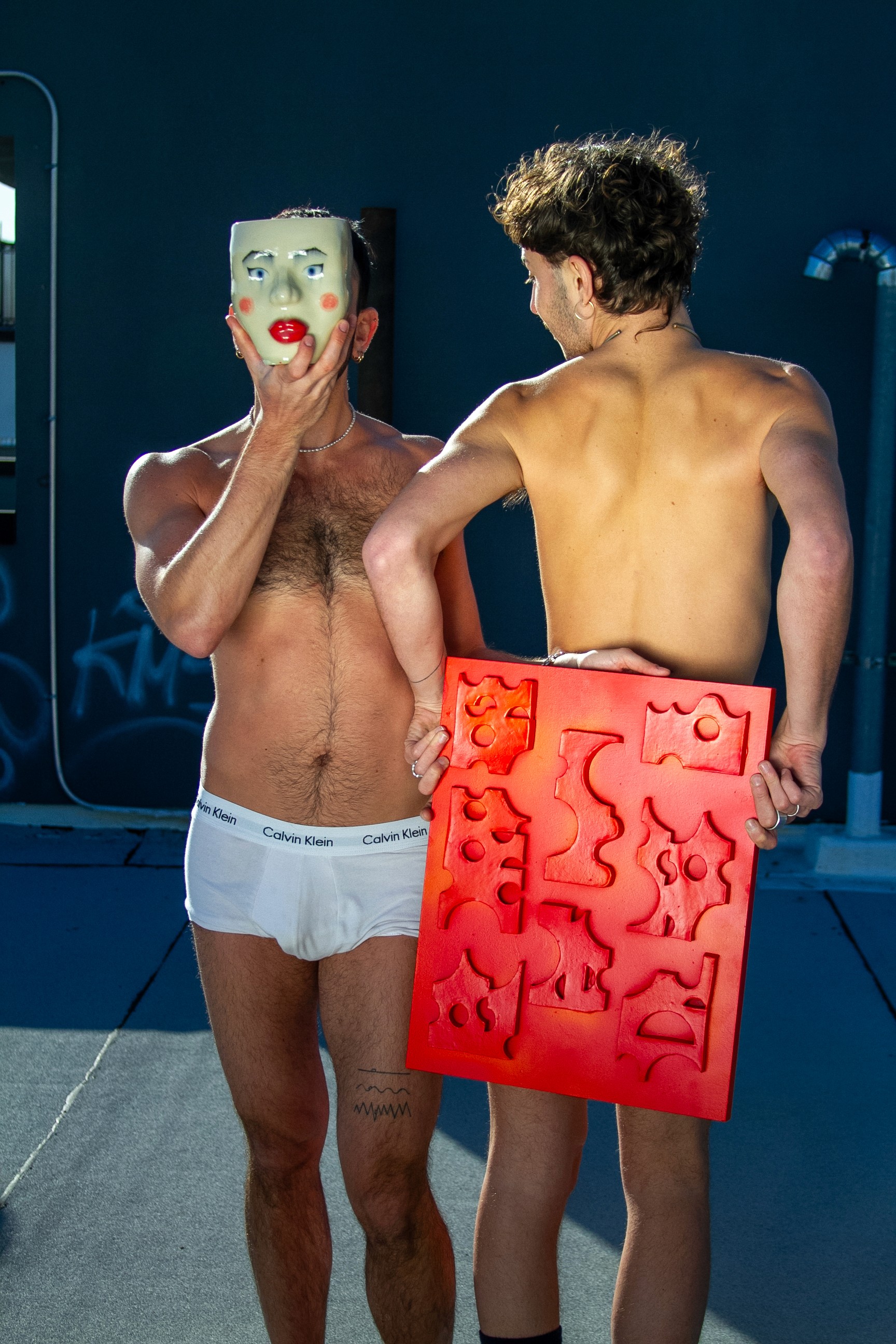
Lensed by Andy Roelofs (@andyxroo)