

WHY NEW YORK?
Bryce Ray
WHY NEW YORK?
By BRYCE RAY
When I first moved to the city, I was walking down the street when a woman came out of a shop screaming, “SNOWFLAKES! EVERYWHERE I LOOK! SNOWFLAKES!” I couldn’t help but laugh to myself. I had only moved to Brooklyn a few weeks before, and I knew I was exactly who she was screaming about. I include this because, before I begin, I want you to know exactly who I am and where I am coming from. I am a white twink from Texas. I’ve been in the city for almost two years. I moved to the city to find more opportunity, acceptance, and community. And to get out of Texas. Like many others, I moved to the city to find myself and follow my dreams. In the same breath, I am actively gentrifying it. Such is the conundrum of many queer people moving to the city in search of a queer safe haven. Queer people--white gay men, in particular--have long been synonymous with gentrification. It is oft said that if you want to clean up a neighborhood, get the gays to move in. How did queer people become tools for gentrification?
It’s a no-brainer why queer people throughout history have tended towards cities over their more conservative, suburban roots. Historically, cities provide more anonymity and strength in numbers. New York City, in particular, has a long relationship with its queer inhabitants. From the early sailors and prostitutes populating Lower Manhattan at the end of the 18th century to the queer artists and writers driving the cultural scene of the city throughout the 19th century, queer people have long shaped the landscape of the city. As we moved into the 20th century, gay life in the city expanded and became more vocal. Larger populations of queer people began to live and congregate in red-lined areas populated by black and brown New Yorkers, creating what became known as “gayborhoods” in what were once considered slums. The most prominent of these gayborhoods was Manhattan’s Greenwich Village. The gayborhoods of Manhattan provided queer people newfound space and freedom to express themselves. These gayborhoods also provided a platform for queer people to consolidate political power, furthering the movement for equality between straight people and their LGBTQIA+ counterparts.

Due to the greater population numbers and growing political influence, New York City set the tone for the larger queer cultural identity. In other words, New York City provided queer people with a voice; or rather, the greater concentration of queer people allowed for that voice to be heard. Of course, this voice was not met without pushback. Despite New York City lending a certain anonymity in its dense population, homosexuality and sodomy were still against the law, and gay bars were routinely raided. While much of the fight for LGBTQIA+ rights remains undocumented, the riots that broke out at Stonewall Inn one hot summer night in 1969 marked a catalytic turning point in queer history, pushing the fight for LGBTQIA+ rights on to the national stage. After Stonewall, much of the focus in LGBTQIA+ rights was safety. For the queer white residents of NYC’s gayborhoods, safety and police have largely been synonymous. In Safe Space: Gay Neighborhood History and the Politics of Violence, Christina Hanhardt, a professor of American Studies at the University of Maryland, details how monied white queer people teamed up with the police to make their neighborhoods safer, largely at the expense of their black and brown neighbors, whose relationship to the police has historically been one of violence and contempt. This led to white gays being largely associated with safety in now-attractive cities, disproportionately displacing and harming their black, brown, and lower-income white counterparts. When the AIDS crisis hit the city in the 1980s, queer people’s role in gentrifying the city only increased. As tens of thousands of occupied apartments were freed up at the hands of AIDS, real estate developers took the opportunity to raise rent prices and “revitalize” these decimated neighborhoods. As Sarah Schulman recalls in her memoir The Gentrification of the Mind, apartments that were once rent stabilized at $305 were then resold for the market price of $1200. Thus, queer people turned into tools for gentrification. It’s no coincidence that the New York neighborhoods most synonymous with gentrification--the West Village, East Village, Greenwich Village and Harlem--were once gayborhoods.
The term “gentrification” was first coined by Ruth Glass in 1964 to describe the trend of middle and upper-class families moving into working class neighborhoods in search of cheaper living. This trend then causes the housing stock to rise and displaces the current residents of the neighborhood. The actual definition for the term has been widely contested, with many scholars debating whether or not gentrification is actually caused by the individual or if capitalist economics have made the process inevitable. While many scholars agree that the tactics of red-lining (discriminately withholding services from neighborhoods with a high population of minorities) and blockbusting (the practice of real estate agents and developers convincing residents to sell at below market prices) are the main causes of gentrification, still others blame consumption and the changing tastes of the middle and upper classes. Gay men have often been cited as contributors to gentrification due to their access to higher payer jobs (in comparison to their female and trans counterparts) and lack of families to support. In other words, white gay men with higher paying jobs move to gayborhoods for nearly the same reasons as their other queer counterparts, but their societal privilege causes them to be tools in gentrification. In his book, The Rise of the Creative Class, urban studies theorist Richard Florida places gay people at the heart of urban regeneration, along with a gentrifying vanguard of tech workers and “high bohemians.” Together this so-called vanguard helped to repopulate and refurbish previously rundown urban areas. Florida argues that these groups suck in more economic investment by creating an attractive environment for rich people and “wealth creators” to live.
While Florida’s theories might hold some truth, they’re too generalized to truly encompass queer people’s role in gentrification. Queer people are not a monolith. One must factor in economics, race, and social class to truly gauge a community’s--or better yet, an individual’s--culpability in gentrification. For example, in The Gentrification of the Mind, Schulman argues that there are varying degrees of whiteness at hand when it comes to gentrification. How can one clump a low-income, marginalized white person in with a monied, dominant culture white person? Sure, they may be buying the same oat milk at the bodega, but the kind of white queer person that Florida is referring to is operating from a much higher vantage point than the white queer person who has moved to the city looking for a better life. The difference lies in how the queer person interacts with the neighborhood they’ve found themselves in. Schulman brings up the point that, for years, young queer people have integrated themselves into lower-income neighborhoods by learning how to fall in line with systems already in place in their neighborhood. The kind of queer person that Florida is referring to--one that comes from a place of money and privilege--moves to a lower income neighborhood and feels that the neighborhood should change to their comfort level and tastes. They actively seek to reform the neighborhood in the name of their own safety and comfort--often at the detriment to the neighborhood’s current residents. The problem with ascribing fault to an entire group is simple: a whole community can’t be blamed for the actions of its worst--or in this case, most privileged--members.
So where does that leave us? Are queer people doomed to be cogs in the capitalist machine? I walk down the street of my mostly Dominican neighborhood, and I question my presence there. I wonder what my neighbors think of my presence in their neighborhood. Do they blame me for their rising rents? I find it hard to reconcile the duality of being both perpetrator and victim. I think of the community of queer creatives and innovative thinkers that I’ve been lucky enough to cultivate around me. Like the queer artists moving to the city before me, I follow a long lineage of queer people moving to the city in search of freedom and acceptance. Queer people that have historically taken advantage of the cheaper rents boasted in lower-income neighborhoods. New York City has proven instrumental in the bettering of queer life around the world. To come to New York as a queer person is like making a pilgrimage to Mecca. In a lot of ways, the city feels like the only place in the world that is truly accepting of queerness. As downtown NYC becomes waspier and waspier and more and more high rises litter the New York skyline, I’m reminded that our individual actions are not the cause of gentrification but rather a system that only seeks to capitalize off of our shared history.


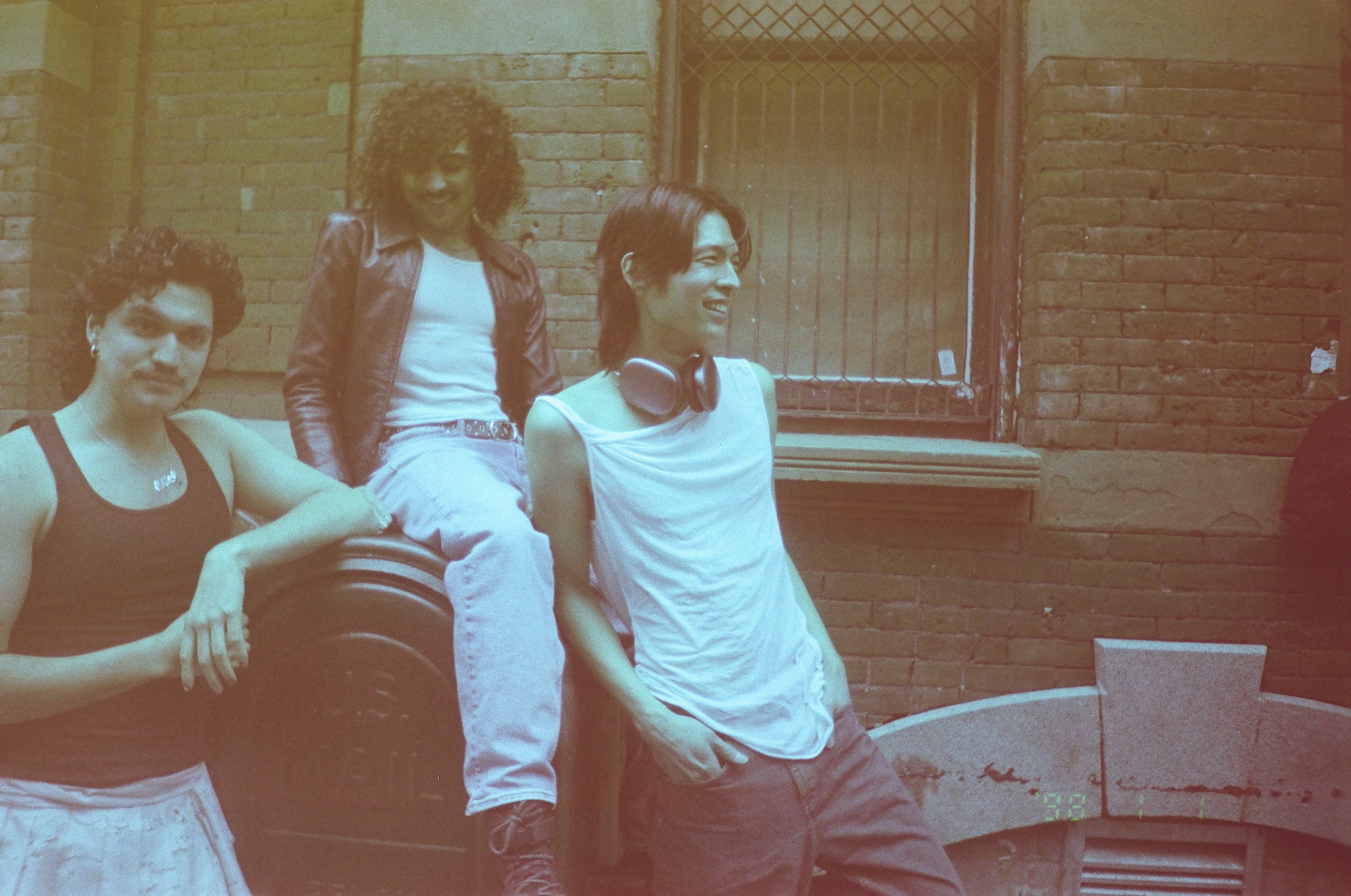
Lensed by Bryce Ray (@popstarbiitch)