

HOW TO BECOME FAMOUS (ACCORDING TO ANDY WARHOL)
Bryce Ray
HOW TO BECOME FAMOUS (ACCORDING TO ANDY WARHOL)
By BRYCE RAY
Andy Warhol famously declared that, “in the future, everyone will be famous for 15 minutes.” The quote wasn’t actually his, but it so fit his brand of celebrity worship and fame fascination that it became one of his most famous. He even hosted an MTV-aired talk show from 1985 to 1987 called “Fifteen Minutes of Fame” that served as an expansion of Warhol’s “Interview Magazine,” providing an inside peek into the glamorous lives of celebrities--a world in which Warhol made himself very much acquainted. Warhol understood the power and influence of the commodified celebrity in an age of mass media consumption. How did Warhol manage to predict the future like that? In an age of memes and viral moments, in which it feels like everyone has been turned into flattened social media profiles to be offered up for public appraisal and consumption, Warhol’s misquoted line about everyone’s 15 minutes of fame feels particularly prescient. Perhaps whoever actually said the quote understood the world that Andy Warhol was commenting upon and, in turn, creating with his art. Like many artists, Warhol had a singularly unique view of the world, one informed, in large part, by his undeniable queerness. It should be no coincidence that what we know of as pop culture today was practically invented by a queer person.
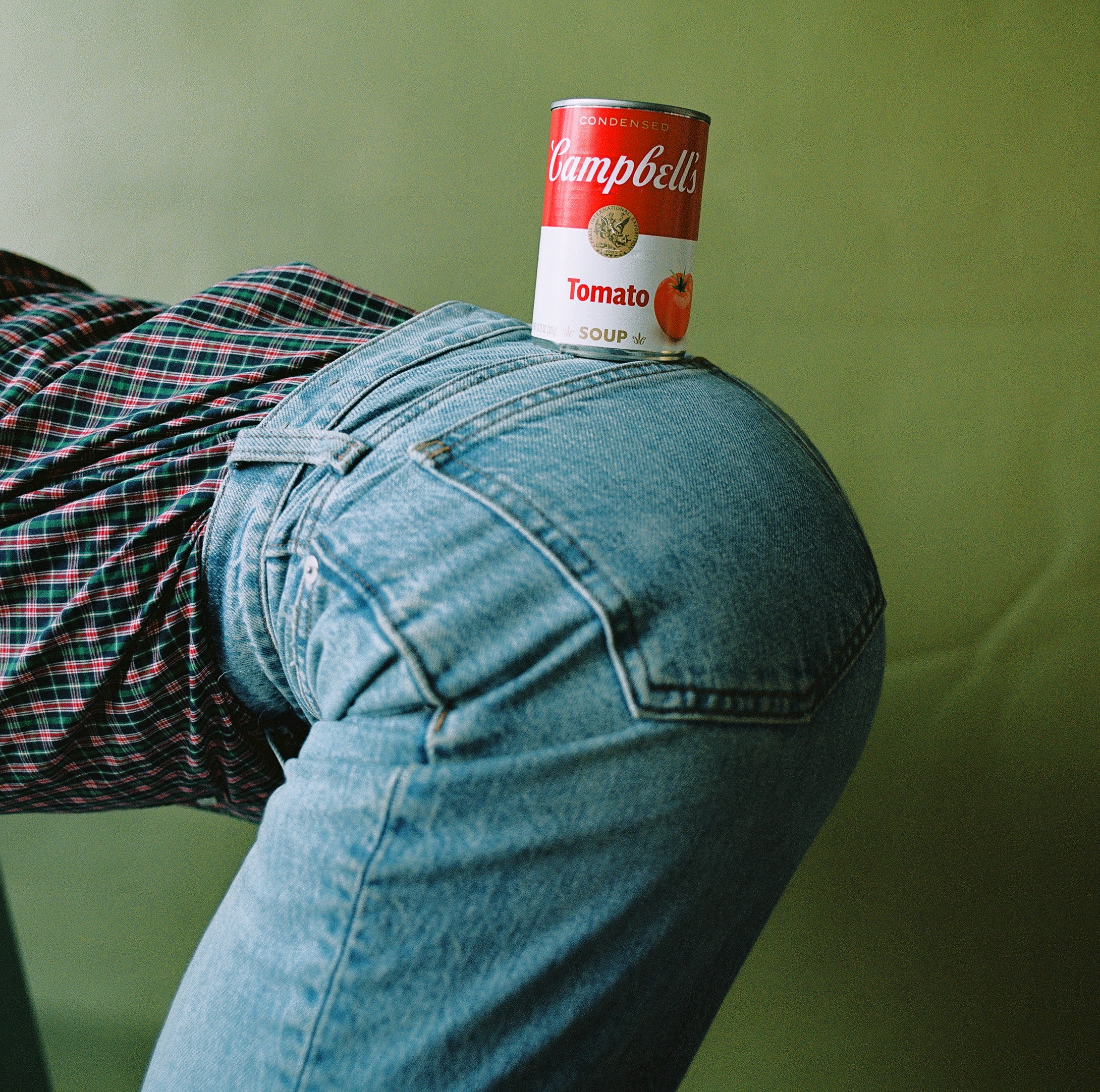
Many queer kids are faced with questions like, how do I explain or find myself when nothing in my environment reflects my feelings or dreams? How is one supposed to know how to live the life they suspect is for them without any legitimate models around for them to follow? Andy was raised during The Great Depression to a working class Slovakian family in Pittsburgh. Due to a neurological disorder called Sydenham chorea, often referred to as St. Vitus Dance because of the involuntary movements associated with the disorder, Andy spent a lot of his childhood at home. He was known to pour over Hollywood magazines and comic books, finding solace in the fantasy and glamor of worlds far away from his working class upbringing. Andy, like many queer people that came before and after him, relied on pop culture as a survival strategy; pop culture allowed him the words to speak his queer feelings. It’s these survival strategies that informed Andy’s aesthetics practices for the rest of his life. After an early career illustrating advertisements, Warhol became one of the forefathers of the Pop Art movement by mass-producing screen prints of everyday objects, such as soup cans and bananas. By mimicking advertisements of the time, he effectively turned these mundane objects of American consumption into high art, blurring the lines between art and advertisement. He then did the same with celebrities like Marilyn Monroe and Jackie O, turning these celebrities into commodifiable icons to be worshiped, commented upon, and immortalized by the American public.
Andy spent his childhood feeling like an outsider, so he spent his adulthood turning himself into an insider. Andy had his own way of seeing the world that he called “Pop.” He described Pop as something that you either got or didn’t, and once you got it, “you could never see America the same way again.” Pop is sold as an outsider’s perspective; for one to truly understand it, one has to be on the outside looking in. In Andy’s own words, “Pop Art took the inside and put it outside, took the outside and put it inside. The Pop artists did images that anybody walking down Broadway could recognize in a split second--comics, picnic tables, men’s trousers, celebrities, shower curtains, refrigerators, Coke bottles--all the great things that the Abstract expressionist tried not to notice at all” (Andy Warhol, POPism). In other words, Andy used mass culture images to flip art on its head, democratizing it and making it more accessible. Ordinary people--outsiders--could see a road sign or an image of Marilyn Monroe and recognize the significance these images have in their everyday lives. The insider/outsider binary of pop took Andy’s childhood feelings of otherness and gave them a world in which these feelings were recognized and even understood. In a pre-Stonewall 1950s and 60s, Pop provided an explanation that identity politics had yet to properly recognize for many queer people.
Warhol was neither in the closet nor out of it--in part because the concept had yet to be articulated in the culture more than referring to a gay man as a “friend of Judy’s,” in part because criticism of his work was intentionally devoid of any mention of homosexuality. Despite the obviously queer themes of films like Lonesome Cowboys (1968) and the infamous Blow Job (1964), many critics chose to focus solely on technical questions of shutter speed and film stock type. His films were described as deliberately bland and banal experimentations in film and nothing more. Even when critics spoke of his paintings, they focused on the painting process and tended to describe the work as passive, abstract, and (again) banal. Warhol’s homosexuality was the most sustained and prevalent motif in his work throughout his career, yet critics refused to properly acknowledge his queerness, preferring to focus on themes of consumerism, production, and death (themes that are, arguably, just as useful in understanding Warhol’s queer vision). This isn’t to say that Warhol didn’t represent a certain level of “swishiness” to the general public. If critics refused to acknowledge his inherent queerness, the general public viewed Andy as the hedonistic left--a dandy-esque cultural figure in the lineage of Truman Capote, only on a much larger scale. It was an open secret, with Andy never openly acknowledging his queerness to the public aside from its prevalence in his work.

In a 1963 interview between art critic Gene Swenson and Andy Warhol for ARTNews, as a part of a series titled “What is Pop Art? Answers from 8 Painters,” Warhol famously declared “I think everybody should be a machine” and “I think everybody should like everybody.” These phrases have gone on to define much of Warhol’s legacy, though they represent only a small part of what was said in that famous interview. In the only surviving audio recording of the interview, Swenson opens the dialogue by asking Warhol, “What do you say about homosexuals?” Warhol goes on to provide an answer, however, the question and any subsequent mention of homosexuality was expunged from the transcript, no mention of it making it into the final published interview. Several times throughout the recording, Warhol states that he thinks the interview should be about homosexuality, and indeed, much of the audio recording features Warhol, Swenson, and two others riffing on the topic:
Warhol: ”No it can’t be like that, can it? Well it has to be something like the idea that, uh, uh… that all Pop artists aren’t homosexual. And it really doesn’t… you know… And everybody should be a machine, and everybody should be, uh, like…”
Swenson: ”I don’t understand the business about—if all Pop artists are not homosexual, then what does this have to do with being a machine?”
Warhol: ”Well, I think everybody should like everybody.”
Swenson: ”You mean you should like both men and women?”
Warhol: ”Yeah.”
Swenson: ”Yeah? Sexually and in every other way?”
Warhol: ”Yeah.”
Swenson: ”And that’s what Pop Art’s about?”
Warhol: ”Yeah, it’s liking things.”
Swenson: ”And liking things is being like a machine?”
Warhol: ”Yeah. Well, because you do the same thing every time. You do the same thing over and over again. And you do the same…”
Swenson: ”You mean sex?”
Warhol: ”Yeah, and everything you do.”
John: ”Without any discrimination?”
Warhol: ”Yeah. And you use things up, like, you use people up.”
Swenson: ”And you approve of it?”
Warhol: ”Yes. [laughing] Because it’s all a fantasy…”
You can see two of Warhol’s most famous phrases--”I think everybody should be a machine” and “I think everybody should like everybody”--paint a much larger picture of Andy Warhol’s queer vision than the blank statements they come off as in the printed version of the interview. In the actual context, these statements paint a sort of queer utopia in which divisions between homosexuality and heterosexuality fall away. Swenson’s opening question (“What do you say about homosexuals?”) and Warhol’s insistence on the whole interview being about homosexuality draws a not so indirect connection between Pop and queerness. In fact, Warhol is painting for Swenson exactly what his queer utopian fantasy looks like.
It was around the time of this interview, after being subjected to malicious NY art world gossip about his homosexuality and private life, that Warhol really began to negotiate his image to the public. Embracing the alienated, effete image the public had already built around him, Warhol leaned in, building an impenetrable persona for the public to try and crack open. From then on in interviews, Warhol intentionally maintained an inscrutable facade devoid of affect while revealing almost nothing to the institutions that were interviewing him. In “The Philosophy of Andy Warhol: From A to B and Back Again,” Warhol even admits to providing differing answers to different institutions so as to always know where someone got their information about him from. Of course, as Andy censored what he revealed to differing institutions, he recorded practically everything in life on his tape recorder, which he often referred to as his “wife.” Why would someone so publicly private put so much of his life on tape? As Warhol’s career progressed and his fame increased, his public persona only intensified, further serving to distance the public from the actual Andy while cementing his status as a Pop icon. Warhol understood the power of mythologizing oneself in leaving behind a legacy. While he was alive, whether it was for protection or fame or both, Warhol hid behind a persona that revealed just enough to keep the public asking questions. In his death, Warhol left behind no actual answers as to who the man behind the enigmatic artist actually was, only his art and hours of tapes remain for the public to try and dissect the man behind the myth.
The power of Andy Warhol today lies in his mysteries. How much can you really know of a living person? How much can you really know of the dead? In the near 40 years since his passing, Warhol has morphed into a million different versions of himself, with each person having their own ideas about who he was and is and what he means in the grand scheme of everything. Andy Warhol has been described as a “born stylist” and someone that understood style to be so much more than its superficialities. For Warhol, style was a fundamental queer survival strategy. He spent his life and career remaking America into a reflection of the queer America he envisioned in his mind. In doing so, Warhol became as synonymous with 20th century American culture as Mickey Mouse.
It’s all a fantasy.
Lensed by Leaf Lieber (@1eafygreens)
Styled by Bryce Ray (@popstarbiitch)