

ANDY ROELOFS FINDS POWER IN THEIR ANDROGYNY
Bryce Ray
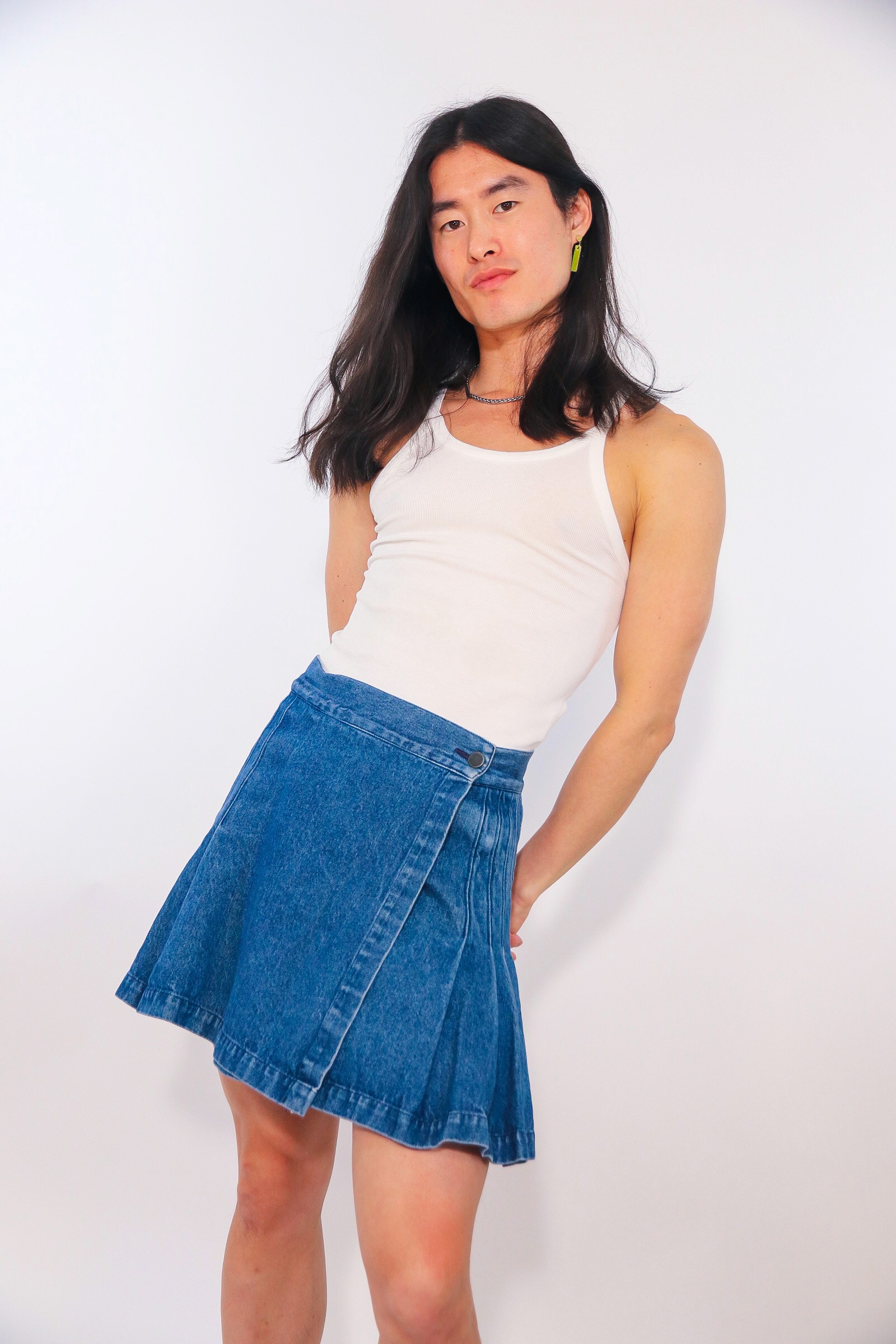
ANDY ROELOFS FINDS POWER IN THEIR ANDROGYNY
A random spring day, cover star Andy Roelofs met up with us at the Public Hotel to talk about growing up queer in the suburbs of Michigan, why they don’t like to label themselves, and why they don’t see themselves in Ché Diaz.
BRYCE RAY: To start, what is your relationship to Sex and the City and which girl are you?
ANDY ROELOFS: My first introduction to the show was when my parents had just got an expanded cable package. I was up late one night and saw Sex and the City on HBO because all of a sudden we had it, and I was fascinated by it. But I didn’t really return to it again until I was an adult because I was, like, single digits when I first saw it. Now that I’ve done the whole sit down with the roommate and watched the full series, I relate to all of them, but I feel like lately I’m a Charlotte. Mostly I’m a Charlotte. In the fact that she’s the most idealistic, but she ends up succumbing to reality the hardest. She’s like “I’m going to do it this way, I want it this way.” And in the end, she still doesn’t get it her way, but she’s fine with it.
BR: I feel like Charlotte is also the one that tends to surprise people. I mean, she had just as much sex as Samantha--and
some of the craziest sex on the show. Like…
AR: I think it’s because, at the end of the day, she doesn't know when to let go. She’s holding so damn tight. I relate to that. I have a very rich inner life--I daydream a lot--so I have these ideas of how things should go. But, of course, when presented with actual life, it’s never how it actually happens. Watching her have all of these crazy moments because she’s able to be like “fuck it,” I think that’s really special. She’s, in that way, the most understanding. I feel like that’s why she’s such a good friend.
BR: Oh, yeah. She’s very much the mother of the friend group.
AR: She understands ideals, but then she also knows enough to know that they’re just ideals at the end of the day. It takes her a while to realize it--it’s a hard lesson--but she does get there. Eventually.BR: Did you watch And Just Like That…?
AR: Yes…
BR: What are your thoughts?
AR: For me, it was fun to come back to these characters after however many years--like twenty years or what not. They’re iconic characters, and I like what they’ve done with them for the most part. I treat it as a different show. It’s no different than going home and seeing friends that you haven’t seen in years. They’re going to change in ways that you didn’t expect because people are more than your idea of them. That’s the biggest thing the show does. Everyone has their idea of who these characters are, but, like in real life, you don’t get to control how they change.
BR: Right, the translation of it from the original series isn’t going to fit everyone’s prescription of how they thought these women might age.
AR: My idea of someone and who they actually are are two different things.
BR: So what do you think about how they handled the inclusion of people of color and queer people on the show?
AR: That bag they bought Jennifer Hudson [in the first film]...it was a crime. [Laughs.] The movies are part of the universe, right?
BR: Yeah--we don’t talk about the second movie, but it’s still a part of the universe.
AR: That was like a paid advertisement. [Laughs.] You know, I think that they are trying, and any attempt is going to fall short. So they’re trying…but, like, I don’t relate to Ché Diaz.
BR: [sarcastic] Oh, really? Why not?
AR: I feel like they’re so one note! I do know people who adopt this singular part of them, and I understand the necessity of it, but I just feel like throughout history--especially in fashion--the are so many people who have existed in such a gray space. Why not highlight that?
BR: As opposed to some one-note, fuck boy comedian.
AR: Especially in fashion. There are so many queers that have been there for so long, and they get turned into this one-note, singular bit. I just think we can do so much better. I don’t necessarily see myself unless I find a way to relate. But I don’t see my friends or the way that they operate on the show.
BR: Do you think you’ve ever seen yourself represented on screen or in media?
AR: No, because it’s either one extreme or the other. I think one of the greatest pieces of queer representation is Veneno [2020]. And Skins [2007-2013] is kind of iffy but also a thing. It’s like OG Euphoria but British. I don’t know. I guess, to answer your question: not really. Not yet to a point that feels true. I feel like my existence is confusing to people, and I’m okay with that. I’ve accepted that.
BR: Do you like confusing people?
AR: I don’t like doing it. I just know that I do. It consistently happens, so I can either try and fight it and be upset about it, or I can just accept it as something that happens.
BR: How exactly do you identify?
AR: I think that my superpower is my androgyny. That’s how I like to describe it. I think, when I get into labels and semantics, it can get very specific. I don’t necessarily like that.
BR: It puts you in a box. Or boxes.
AR: The whole point is that I lack a box. I lack those parameters. That’s my power. I can see why that’s confusing, but then when anyone is like “What are you? How do you identify?,” that is asking me to put up those fences. Everyone is like, “What are your pronouns,” and it’s any of them. For me, it’s all about how well you know me--how you perceive me. For the most part, I know who I am. I’m just curious to see how it comes off to you. There are some people who will be like, “I’m going to just call you bro.” And I’m like…
BR: You’re not offended, you’re just turned on!
AR: [Laughs.] I’m not offended, but they’re choosing to only see a facet of me that makes them comfortable. So that’s on them. For the most part, it’s good hearted. These are just concepts that most people have never considered, so it makes them uncomfortable. For me, who’s lived in this, these are things that I think about all the time. I switch left and right.
BR: When did you first have feelings that you were queer or more androgynous?
AR: I used to always answer the phone and people would be like, “Tina?” which is my mom’s name.
BR: Same, honestly.
AR: I’ve always felt that I’m never going to fit everyone’s description of a man, I’m always going to fall short, so why am I trying to achieve that when maybe it’s not even a definition that’s supposed to fit me. It just doesn’t fit who I am and it never has. In high school, you kind of realize that there are so many female traits that fit. I had this realization that, like, all my friends are girls, and I relate to them in so many ways, maybe there is more to me that has this side.
BR: You grew up in Michigan. How was it growing up as a gender non-conforming person there?
AR: It was--[Laughs.] I did the thing where I became student body president, I kept my grades perfect. I’m also adopted, so I’m not white. And I’m queer.
BR: Your adopted parents are white?
AR: My parents are white. Most of the town I’m from is very white. So people have these notions about race and adoption. I just realized that if I always have a smile on my face, if I’m always perfect, no one can say shit. And for the most part it worked, but it’s exhausting. I moved to California as soon as I could for school. It’s funny because the midwest is so nice, but nice is the baseline. You get such inauthenticity because everyone is fake, and I can read that.
BR: The South is very similar.
AR: Right. And it just puts you on edge the entire time. It’s like social anxiety but real. [Laughs.] You can’t help but think that these people all hate me.
BR: You’re like, what is my family going to say now.
AR: Or, I’m like, is my family going to catch this because of me. I don’t want to ask anything of them, so it’s just me existing and catching shit because of it.
BR: Do you find that your parents are accepting of you?
AR: I know my parents love me. I’ve had a lot of therapy about how you just kinda have to accept that this is where they are. You know, they didn’t kick me out or disown me, so that’s a win.
BR: They may not understand you, but they still love you.
AR: There’s definitely a big barrier. But there’s just things in life that you have to accept. You can hope for things to get better, but you’ve gotta keep that wall up--protect yourself.
BR: Okay, so how is dating as a gender non-conforming Asian person?
AR: Oh, it’s weird.
BR: How so?
AR: I feel like people don’t know--when you have such an expansive definition of yourself--people don’t know what to do with all of that. It turns into guys on the straighter side of the spectrum calling you “baby girl”--which is fine--and all the guys on the queer side of the spectrum calling you “baby boy.” It’s to find someone who sees you as both--or at least a willingness to understand. I thought I found someone who did but…
BR: Things happen.
AR: Things happen!
BR: As a photographer, how does your queerness inform your work?
AR: I think my queerness is in everything I do. Anything from my viewpoint is queerness. It’s such an interwoven part of who I am. The people that surround myself with and the people that I’m willing to work with, that’s the biggest thing. I don’t like working with everyone, and I get to be really selective about that because it’s not my main source of income. In that way, I’ve really only worked with queer people, and I love that. Letting them show who they are, it’s queer but also queer representation because I’m helping them show themselves how they want to be shown.
BR: Where do you want to go from here? What’s your biggest dream career wise?
AR: I want to see more of me and more of my friends in everyday life. I have built this very beautiful life--I’m surrounded by so many beautiful people--and I just want them to be seen--I want us to be seen. It’s realizing that there is so much space for that now with the internet and with social media. Technology has made everything so accessible that it’s important for us to carve out that space for ourselves because it’s available. It’s being willing to and having the follow through to do things because it’s important that we’re seen. It doesn't need to be national television for it to count for something. Rewriting those definitions of what it means to be seen and making sure impact hits where it counts.
BR: Okay, back to Sex and the City: why do you think queer people hold so much space for it in spite of all of its issues?
AR: I think it’s the fantasy. At the end of the day, everyone is a romantic. I think that the show represents the side of the city that is the reason people come here. There’s this essay on Medium that’s like “New York Doesn't Love You,” that I read right when I moved to New York. I always think about it because you still want New York to love you. We’ve all got this big, romantic notion of the city, and whether you want to or not, you’ll still find those magic moments. It’s fun to see them on screen. Crazy and weird shit happens, but the reality of living here is that, with so many people, there is going to be some crazy, weird shit happening. For queer people who have been shown one side of things for so long, it’s the possibility that the craziness and the wild shit could be for everyone. You can create that magic, or you can find that magic. You just have to sort through some shit to get there. [Laughs.] And the fashion.
BR: And the fashion! Of course.
*This interview has been edited and condensed for clarity and your viewing pleasure.
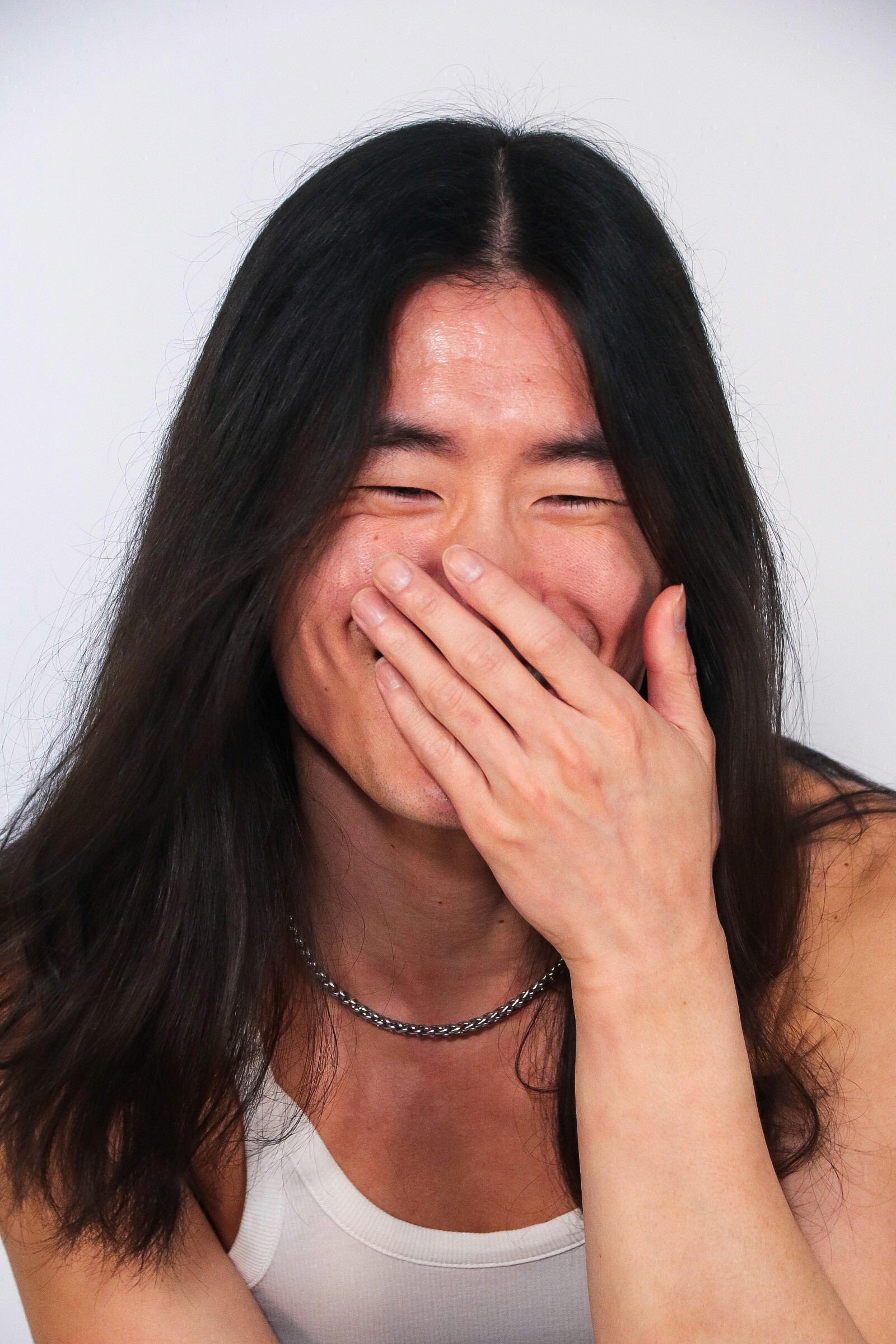
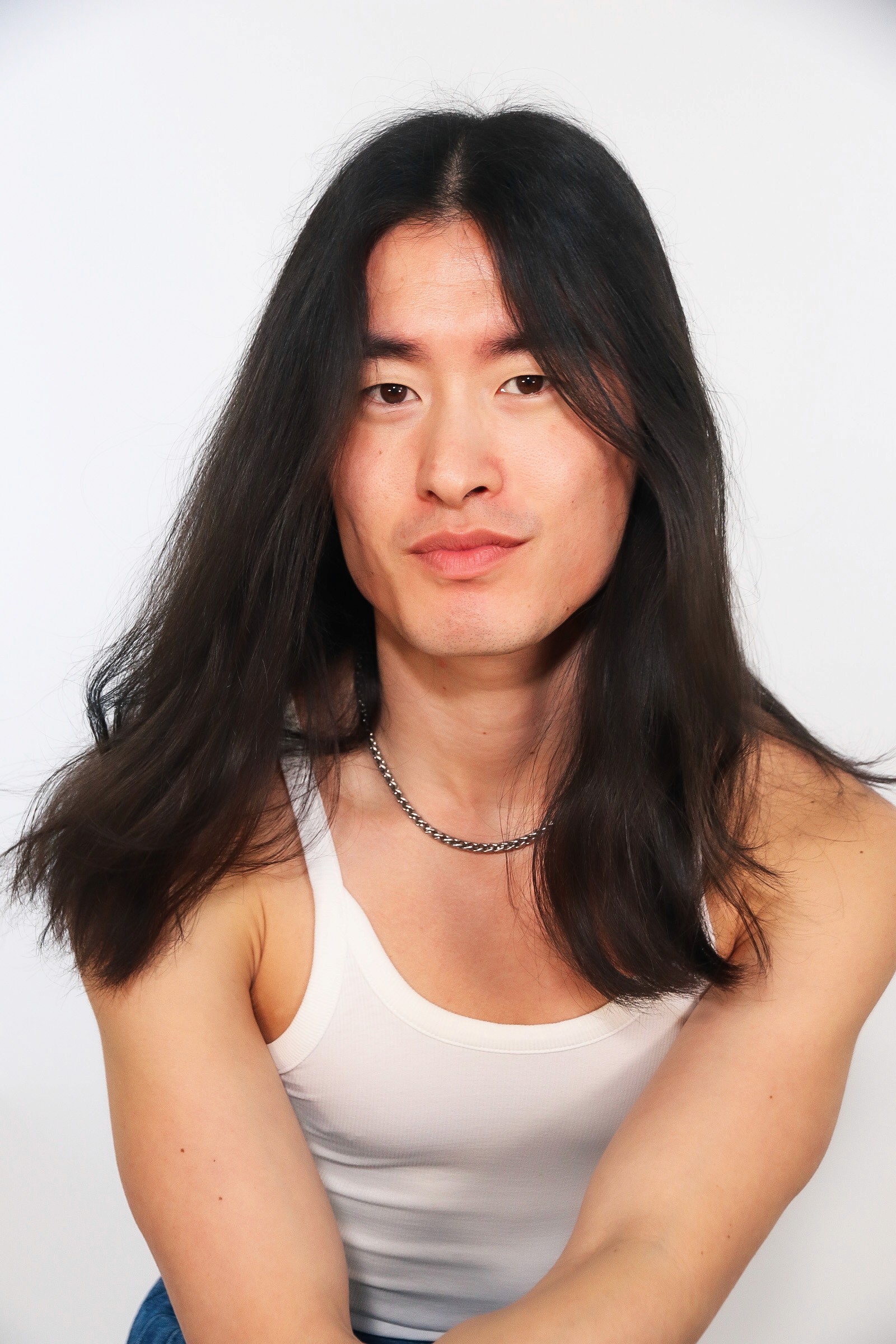
Lensed by Dainique Jones (@dainiquesphotos)
Styled by Bryce Ray (@popstarbiitch)
Style Asst: Sonya Stasiuk (@sonyastasiuk)
Production Asst: Ty Dalrymple (@tydalrymple)