

D'MARIEL JONES BREAKS DOWN DATING AS A BLACK QUEER PERSON
Bryce Ray
D’MARIEL JONES BREAKS DOWN DATING AS BLACK QUEER PERSON
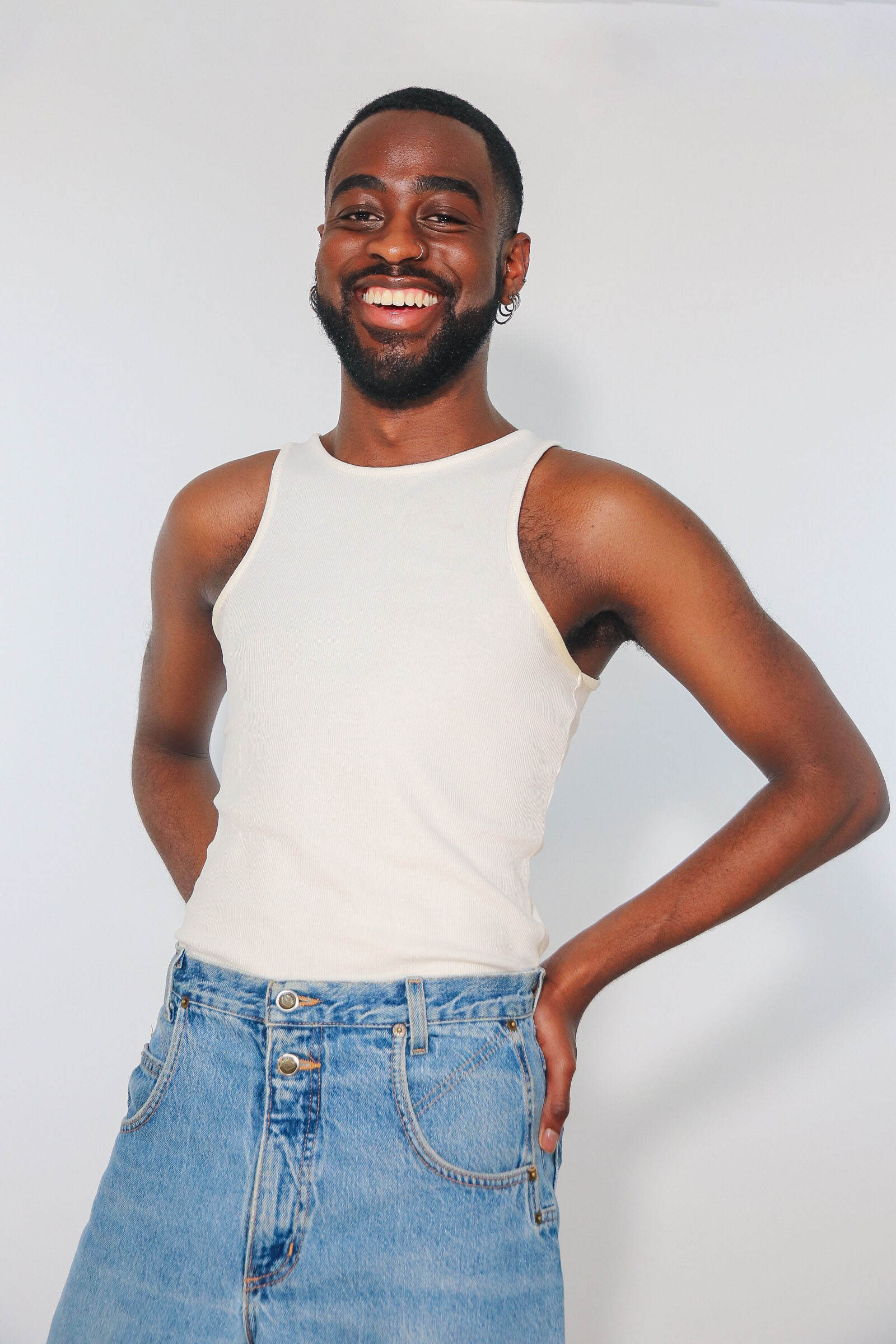
Cover star D’Mariel Jones met up with EIC Bryce Ray uptown in Bryce’s apartment to discuss dating as a Black queer person, representation in media, and why he’s still trying to find on screen representation of himself. D’Mariel Jones is a Black, queer, actor, singer, dancer, model, and director from Texas. He considers himself to be an ACTORvist and loves to use his artistry to promote social change and inspire others to fight for a more equitable world. He recently graduated from Texas Christian University where he got his BFA in Musical Theatre and has now relocated back to NYC.
BRYCE RAY: Okay, let’s start with an easy one: which of the four women do you identify with and why?
D’MARIEL JONES: Oh, no. I have limited Sex and the City knowledge, but I do recall you saying that I’m a Samantha.
BR: Mhmm. You’re like a Samantha with a Miranda moon. You definitely have Miranda in you.
DJ: Miranda is very logical from what I remember. I do see a little bit of that. But Samantha? She’s a party girl. She likes to go out there and be wild, meet all the men.
BR: And that’s what you like to do.
DJ: And that is why Samantha is me.
BR: What is your relationship to the show? Or do you really have one?
DJ: That’s a good question. So I think it’s something that my connection is going to grow with. I’ve been wanting to actually get into it and watch it from the beginning. I remember watching it with you for the first time and liking it. I was like, Oh, I see why queer people like the show. It’s just these four women living this fantasy life and doing all of these amazing things in New York. Like, what gay person doesn’t want to live in New York and just live?
BR: That’s exactly what we’re examining with this zine. With all of the problematic parts of the show, why do you think we like it so much?
DJ: I feel like even with it being problematic and having those issues, it’s something a lot of queer people, especially gay men, lean towards. In the same way that, at one time or another, every gay man has seen a celebrity woman and wanted to be her. With this show you get four very distinct and different women that are very much like the different types of gay men--or at least what they want to be. And that makes queer people gravitate towards it. They think, Oh, they’re living this upscale, ideal life that I would wanna live if I were them.
BR: They can see themselves in the fantasy.
DJ: And I feel like, especially for the time that it came out, there weren’t a lot other things like it that were, like, pushing the button and showing you a more crude sort of entertainment. And it was women doing it, so it was even more revolutionary in that sense.
BR: Yeah, definitely. That brings up another question: how harshly do you think we can judge a show that was made 25 years ago?
DJ: I mean, like, yes, can we see things and call it out for what it was--or is? Yes. But I’m also like, the show isn’t on anymore. What can you do to change the past? There’s a lot of stuff that I remember watching growing up and thinking, Oh, that’s really offensive what they’re saying. But people laughed it off and/or didn’t really bring it up. You know, as a kid I didn’t really think about it in that way. I’m just kind of like, yeah, times have changed to where you couldn’t release a show where they’re saying or doing those things now. It was just kinda the time, you know?
BR: One of the criticisms of the show is the lack of diversity, especially considering it’s set in a city as diverse as New York. When would you say was the first time you saw yourself on screen? Or have you ever?
DJ: [Laughs.] I feel like that’s a mixed question. Part of me is like, sure, I’ve seen myself, and another part is like--not trying to say that I’m just so original--but I do feel like I haven’t seen much of myself on screen. Which is interesting since just finishing with my college showcase. So much of it was like, What characters on a TV show could you play? Or what actors are getting jobs that you think you could be doing? I’m just like, Well, I haven’t seen myself, like, fully portrayed in the media. Like, I’ve never really watched something and been like, That’s so me. I mean, I’ve seen an overall umbrella. I think Pose [2018-2021] is probably the first time. Obviously it took place in the 80s and 90s, you know. It’s a period piece show, but I saw myself in those characters. That’s probably the only show I could truly say that about.
BR: How’d that make you feel?
DJ: It felt good. It’s just so interesting. Being someone that consumes media and how media is made to make its viewers feel like they’re being seen, even with that, most things I’m seeing and taking in aren’t really me or a representation of me.
BR: Right. It’s still very catered to white people.
DJ: Exactly. And if it’s catered to Black people, it’s mostly catered to cis straight Black people, or like, religious Black people, because so much of Black media is about religion and Black people’s relationship to God and the church. And I’m just like, that’s not me, though.
BR: Why do you think that is?
DJ: Why do I think it’s never really geared towards me? Because I’m Black and queer. And I don’t subscribe to heteronormative things and ideals. And though I hate using masculine and feminine, I wouldn’t be labeled as what someone would consider to be just super masc, either. They don’t make a lot of representations of that or think that things like that would sell or do well.
BR: Kind of taking us back now, you’re an actor. How did you get started, why do you do it, and what do you want to achieve with it?
DJ: I started acting when I was in third grade. I did the school musical. We did The Jungle Book, and I liked doing it. Then in the fifth grade we did another musical, and I was like, Oh, I like performing. But then I pushed it to the side because I thought that I was going to be a sports girl.
BR: [Laughs.] Didn’t we all.
DJ: I played basketball and was not that great at it. I was just doing it because my parents wanted me to. But I was pretty much doing theater throughout. Though I didn’t think I wanted to pursue theater because I wanted to be a recording artist. I just couldn’t write music. So that wasn’t going to work for me. Then I ended up going to school for theater. That was when I really started using my love for theater and trying to, like, amplify my voice and other people’s voices through it. That’s how I started Theatre TCU Black Excellence. And then I started producing shows and directing shows that we were putting together. On top of being an actor, I really want to direct and produce for film and TV and stage. I just like to tell messages with my art. Like, obviously, I like to do things that are just for entertainment--things that don’t necessarily have much of a message or story--but I’m so much someone who fights for what they believe in and what’s important. I want to use my art to amplify those things.
BR: How do you think your queerness plays into that?
DJ: Oh, I think it plays a lot into it. Part of it is because I don’t see a lot of Black queer representation in media. I want to be a part of that change in making it more mainstream and normal--where it doesn't have to be labeled as revolutionary because it’s Black and queer. I want to be able to be like, I’ve made something that works for everyone and everyone can learn something from it. My queerness is so much of me and what makes me me. It’s definitely something that I think will be in a lot of my work and my artistry.
BR: What would you say is the best part about being queer?
DJ: Probably the sense of community that comes with it. I feel like I’ve met so much, like, chosen family--especially in the last couple years--and those are the people that I’ve really had strong relationships with and connections that stay true throughout. I just think, in being queer, there’s so much creativity and originality that comes with it. There’s just nothing like being queer. I honestly don’t care to be around straight people. It’s just not as fun. [Laughs.]
BR: I mean, yeah, like what the hell would you even talk about?
DJ: Right? I like to live in a world where I think everybody’s gay. I think that’s true, anyway.
BR: So you’ve talked about why you like being queer, but what exactly does it mean to be queer to you?
DJ: Hmm. That’s such a hard question. I feel like for me, it’s liberation. It’s having this unapologetic outlook on life and the way I fit into this life. They always want to make queer people feel small or obsolete. It’s about taking up space because I belong.
BR: What would you say it’s like dating as a Black queer person?
DJ: [Laughs.] I’ve been in a lot of places that are predominantly white spaces, so unfortunately, when you’re around that it’s a bit of a split. A good majority is not attracted to Black people. Then you’ve got a section that fetishizes Black people. And then you’re just left with a little pool of people that are attracted to Black people. And then in that tiny, tiny pool, about 60% are only attracted to lighter skinned Black people. So then that leaves you with about like 4% of the dating pool that is into you. Okay? Then let’s take that 4% and let’s split it in half because half is only into masc, straight-presenting bro. So that leaves me with 2%. And, actually, let’s take the 2% and divide that one more time [Laugh.]. Because then you get the people who are wanting you to be a bottom or you’re both tops or both bottoms so you’re just going to be sitting there bumping purses or swords. So that really leaves me with about .5% of the dating pool--if we’re talking white people. It’s just a mess. It’s not cute. It’s not giving cute. I am, but dating isn’t.
BR: You said that you want to direct and produce. If you could produce any kind of media, what would be and what would it be about?
DJ: It would be a TV show. And it would follow a really eclectic group of friends. It would be younger though. Somewhere in between Euphoria and Insecure. And it would center around a dark skinned--like dark, dark, dark skinned queer man. It’s just him and his friends living life and not giving a fuck. And I think I would want it to take place like in New York. I think that'd be interesting to see because people see New York and they're like, “Oh, it's so diverse and everything is so great!” I'm like there's still a lot of racism and transphobia, meanness and fat phobia--all that shit--in New York. I’d like to see a dark skinned Black queer individual navigating that. it would be about, like, a group of friends. They would all be queer. There will be no straight people on this show. I mean, there will be but they will be like the manager. [Laughs.] Yeah, they're not being featured on my program. Unless it's a straight woman, I guess. But a man No. Not on my watch!
*This interview has been edited and condensed for clarity and your viewing pleasure.
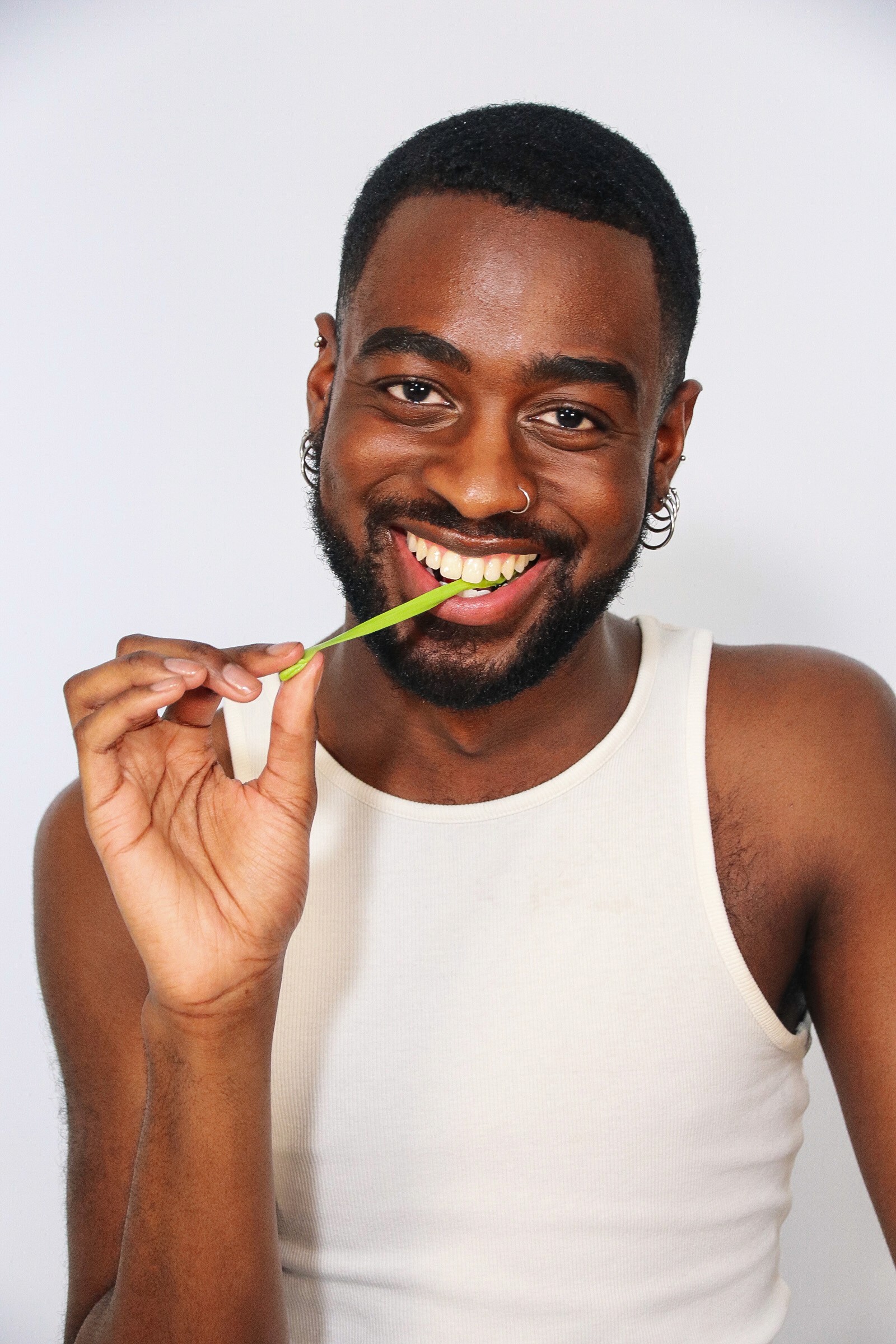

Lensed by Dainique Jones (@dainiquesphotos)
Styled by Bryce Ray (@popstarbiitch)
Style Asst: Sonya Stasiuk (@sonyastasiuk)
Production Asst: Ty Dalrymple (@tydalrymple)