

QUEER & FABULOUS?
Bryce Ray
QUEER AND FABULOUS?
Celebrating 25 years of our favorite problematic white women
By Bryce Ray
“This neighborhood is trendy by day and tranny by night,” or so describes Samantha Jones of NYC’s Meatpacking District in the season three finale of Sex and the City. Samantha (played by Kim Cattrall), has just moved into a loft in the historically queer neighborhood once populated by queer clubs and, you guessed it, meatpacking plants. Her only quibble with the neighborhood as a so-called sexually liberated cis heterosexual white woman is that the transgender women loitering outside her window are keeping her up at night with their lewd talk. (Come on, is talking about shitting on dicks really lewd talk?) Samantha spends the episode going back and forth with the women: she dumps a pot of water on them, they throw eggs at her. By the end of the episode, Samantha is considerate enough to invite her new transgender neighbors to her rooftop housewarming party--an olive branch, if you will. The show’s four main women drink and laugh and sex columnist Carrie Bradshaw, the show’s protagonist, even does a little twirl for their new friends, friends that only a few scenes earlier Carrie (played by Sarah Jessica Parker) described as “half woman, half man, totally annoying.”
When Sex and the City premiered on HBO back in 1998, it was progressive in its depiction of single women unafraid to talk about sex. The show’s four women were all in their thirties, all unmarried, and all had little to no qualms about having sex outside of marriage. In an America still reeling from a president’s sexual relationship with his 22-year old White House aide, Sex and the City confirmed what was at the forefront of everyone’s minds: sex. The show tapped into female sex in a way that hadn’t often been seen on screen in such a mainstream way. The series’ reflection of the cultural zeitgeist turned the series into a cultural phenomenon --spanning six seasons, two movies, and a reboot series. As creator Darren Star once said, so much of what makes a hit show is timing--especially when it comes to a zeitgeisty show like Sex and the City. The issue is that zeitgeisty shows don’t tend to age well. When viewed from our modern, post-Trump lens, any hint at progressiveness gets stripped away by a dearth of diversity, offensive queer stereotypes, and surprisingly close-minded views on sex and relationships. In spite of these negative attributes, Sex and the City has become a mainstay in queer culture--a guilty pleasure that queer friend groups everywhere love to pick apart: assigning who out of the group is the Samantha and who is begrudgingly the Charlotte, obsessing over the fabulous outfits, and yelling at Carrie for being such a bad friend. With all of the show’s faults, why is it that queer culture holds so much space for a show as outdated, problematic, and queerphobic as Sex and the City?
Perhaps the answer lies in the two cis gay men that created the show: Darren Star and Michael Patrick King. Darren Star came on as showrunner of Sex and the City fresh off of the short-lived Central Park West. He had previously made a name for himself in LA with shows 90210 and Melrose Place. His goal was to forgo the excess soapiness of Central Park West and strip it down to create a show that better reflected the lives and relationships of people he knew--in particular their sex lives. After the pilot was brought to series by HBO, Michael Patrick King was brought on to the show as an executive producer and a team of mostly single, mostly female writers was assembled. The number one rule of the writers room? Every single story or situation used on the show had to be taken from the writers’ own experience or someone the writer knows. In a 2018 Vanity Fair article looking back on the Sex and the City writer’s room 20 years later, Michael Patrick King stated, “The people that I hired were all sort of in this same emotional place as the four characters. At one point, everyone was single, living in New York, and feeling like an outsider,” he said. “That’s why the show felt authentic.” Of the twenty two writers credited with writing on the show, none of them are of color and only King and Star are queer. While an all white, nearly all heterosexual writing room was nothing out of the ordinary for the late nineties, it certainly explains the writers’ tendencies to reduce anyone outside of the four protagonists’ social class (i.e. straight, white, and privileged) to mere archetypal stereotypes.
The show’s biggest saving grace in terms of queer representation came in the form of Stanford Blatch, Carrie Bradshaw’s gay best friend. While Stanford is never given the room to shine that the other ladies do, his presence arguably provided queer representation that was sorely lacking in the late 90s and early aughts. Played by the late Willie Garson (notably straight, though again, it was the 90s), Stanford was different from the kinds of gay men gracing people’s screens at the time. He wasn’t as perfectly coiffed and Ken-doll-like as Will Truman nor as zany and off-the-wall as his friend Jack McFarland on Will and Grace. He certainly wasn’t like the hairless, buff, poppers-huffing party gays of Queer as Folk. No, Stanford Blatch was different. He was bald, bitchy, impeccably dressed, and looking for love. According to Willie Garson, this was an intentional choice on behalf of himself and the writers: “That was really important, that it wasn’t all just hooking up, taking drugs and dancing all night,” he said. “That Stanford was an actual person, looking for relationships. And that’s a really important thing, because to many people, that was what it looked like.” Indeed, for many queer people who grew up watching the show, Stanford served as a much needed totem pole in an otherwise desolate landscape for queer representation. As comedian and Sex and the City guest star Margaret Cho described after Garson’s death in 2021, “He wasn’t the limp-wristed comic relief we’d been forced to know as ourselves in the media. He was all the things.” He provided a reference point and source of inspiration for this kind of gay New York sophistication: he was culturally plugged-in, sexually liberated (he was known to cruise online chat rooms as “Rick9Plus”), and unabashedly expressed himself regardless of his insecurities. Despite the effort to make Stanford different, he is still often written as a flamboyant and flat character. He’s a character that never truly gets his due because, in the same way that Stanford is so often sidelined and mistreated by his BFF Carrie, Stanford is maligned by the series. If it weren’t for Willie Garson’s biting and ultimately charming performance, Stanford Blatch would have remained the insignificant, gay accessory to Carrie in the eyes of the public as well as the Sex and the City writers room.
There’s an old Marge Simpson quote that goes something like, “That’s the show about four women acting like gay guys.” Indeed, it’s always been a known secret that the four women are actually substitutes for gay men. From their designer clothing, frank talk about sexuality, and nightlife-centered lifestyles, the four women look like any group of gay men you would see in Chelsea or Greenwich Village. Coming from a show created by two gay men in the 90s, the inclination to use the four women as female personifications of their own lifestyle makes sense. You write what you know--even if the rest of society isn’t quite up-to-pace with your world. What Darren Star and Michael Patrick King know is what it was like to be white and gay in the 90s, a time before intersectionality had really been introduced to their subset of privileged, gay Manhattanites. Their generation did, and to an extent still does, harbor all of the anti-trans and biphobic beliefs held by the women on the show. In a 2004 article from the Sydney Morning Herald about the theory, another, albeit outdated theory about writing comedy is cited, “you write black and cast white,” or, in other words, “you add style and cool to your white characters by writing as though they were black.” The Sex and the City writers appeared to co-opt this formula to be “write cis white gay, cast cis white female.” In this regard, many of the issues prevalent in and amongst the queer community are represented in the four women. Is part of the reason queer people make so much room for these problematic women because they see themselves in the women’s prejudices?
But then there is Candace Bushnell. Bushnell started writing a column in the New York Observer back in 1993 called, you guessed it, Sex and the City. The column chronicled the lives of her and her Manhattanite friends--in particular, their relationships and sex lives. She was the original Carrie Bradshaw. No, literally--she created Carrie Bradhsaw as a pseudonym so that her parents wouldn’t know that they were reading about their daughter’s sex life. Bushnell moved to New York in late 70s, and as lore would have it, was on the dancefloors of Studio 54 a mere 3 days after moving to the city. Like Carrie Bradshaw, she was a princess of the New York nightlife scene: she went out every night, rubbed elbows with New York’s high society, and survived off her column and freelance work for Vogue. Many have criticized the show for being unrealistic, and yet, Bushnell really did live the life Sarah Jessica Parker acted out on screen. She even had her own Mr. Big--Carrie’s main love interest throughout the series--in Ron Galotti, a publisher at Vogue. Bushnell’s nightlife-centered lifestyle came on the heels of the women’s liberation movement of the 1970s and the popularization and normalization of the female orgasm and female sex by Helen Gurley Brown, Editor-in-Chief at Cosmopolitan and Bushnell’s boss in the 80s. Women, especially those in New York City, were experiencing a sexual revolution. Essentially, as tends to be the case, these women began living their lives like gay men. Much like the favored pink drink of Bushnell and the Sex and the City women, queer culture and it’s proclivity towards hook-up culture and the “zipless fuck” was appropriated by the women of Manhattan as they, too, found sexual liberation. Perhaps the Sex and the City writers didn’t even need to write gay and cast cis white female, the women of Manhattan had already done it for them.
Darren Star has said of the original series that it was started as a way to explore and shed light on people’s sex lives with each episode centered around a prevailing theme about sex, love, and relationships. At the time the show originally aired, queerness and everything it encapsulates wasn’t something that had broken into the mainstream the way it has today. Back then it was still considered taboo to discuss lesbianism or bisexuality much in the same way that sexuality as a whole was considered taboo. For a show that made a name for itself by talking about taboo sexual topics, it’s only natural that they would attempt to include queerness in this sexuality (especially when you take into account the “write gay, cast straight female” theory), even if only as the hot button topic of the week. The women and the writers who wrote them lived in a time when sexuality was viewed in a very binary way. Of course the show would reflect that. To view the show from a modern lens is to beg the question: how harshly can we judge a show that was made 25 years ago?
The 2021 reboot And Just Like That… attempts to answer this question as it tries to make up for past wrongs. The reboot finds the three returning women (Kim Cattrall opted not to return as Samantha Jones due to off-screen drama between her and Sarah Jessica Parker.) grappling with the criticisms of the original show as if they were the original writers themselves. Despite a new crop of writers (aside from head honcho Michael Patrick King), the women come into the reboot like Dorothy entering Oz--awestruck and confused by the strange new politically correct world around them. To ease the transition into this new world, each woman gets her own magical person of color to show them the ropes: Carrie is now on a podcast called “X,Y, and Me” led by the self-proclaimed “queer nonbinary Mexican-Irish diva” Ché Diaz (played by Sara Ramirez) and befriends her Hindi real estate agent Seema (played by Sarita Choudhury); Charlotte hits it off with Lisa, a fellow mommy at her children’s school who just so happens to be Black (played by Nicole Ari Parker); and Miranda, after a COVID-induced mid-life crisis, quits her job as a corporate lawyer and goes back to school where she becomes close with her Black professor Nya (played by Karen Pittman). The whole thing tries so hard to stay relevant and appear woke that it’s clear that the women (and probably the show’s writers) merely skimmed through Robin DiAngelo’s “White Fragility” rather than doing any actual work to truly understand why the world has reached its current state of feigned equality and political correctness. For a show that once had its fingers on the pulse of the predominantly white, privileged Manhattan glitterati, it is hard to tell whether or not And Just Like That… is a direct translation of that world or a grossly exaggerated reaction to how the glitterati are coping in a post-Covid world.
Queer representation has come a long way since the days when people tuned in every Sunday night to watch the original series. Ché Diaz (they/them), the character that launched a thousand memes and more internet think pieces than anyone would/could ever want to read, acts as the womens’ introduction to the world of pronouns and queerness--at least the 2020s version of it. Part comedian, part inspirational queer activist, Diaz looks good on paper. A queer comedian with a podcast is certainly no anomaly in the 2020s, so the inclusion of Ché Diaz to the Sex and the City universe should feel natural. The issue is simple: in spite of their unfunny stand-up, their frequent pot-usage in inappropriate spaces, and the time they fingered Miranda in Carrie’s kitchen while Carrie peed herself in the next room, they simply aren’t believable as a character. As trans model Dylan Thomas described it to Rolling Stone, “Does it feel super authentic to me as a queer, trans person? Not really. But it does follow a pattern as defined by Hollywood… I believe representation in the beginning, as portrayed through the lens of non-members of a community, often misses the mark, while the intention for visibility is good.” The inclusion of Ché and epic online backlash makes sense coming from a writer’s room that--while certainly more diverse than the original--contains no non-binary or gender-nonconforming people; and despite reported help from a representative at GLAAD and close work with actor Sara Ramierez (who came out as nonbinary in 2020), the character still comes off as a flat stereotype of queerness. Sound familiar? In a world where shows like Pose and Euphoria have provided us with depictions of queer characters that are complex and truthful to the individuals they are representing, Ché Diaz simply doesn’t cut it. Overall, And Just Like That… and its inclusion of Ché Diaz is well-intentioned, but is well-intentioned visibility enough to overcome offensive stereotypes?
Part of what makes the inclusion of Ché so grating is Ché’s relationship to Miranda Hobbes. Miranda, who previously tried her hand at lesbianism in the first season of the series before deciding she’s “definitely straight,” goes through a queer awakening in the reboot. When Carrie invites Charlotte and Miranda to Ché’s stand up special, Miranda appears to go through some sort of cathartic realization prompting her to stay (alone) for the afterparty where she shotguns weed from Che’s mouth, clearly enamored. From there we watch Miranda’s life implode as she breaks up her marriage (the longest, and arguably most beloved relationship in the franchise) and dives headfirst into a relationship with Ché. Miranda has always been the most queer coded of the women, so it shouldn’t come as a surprise that her character would come out as queer in the reboot. Cynthia Nixon, who plays Miranda, even came out in her own life after splitting with her husband back in 2003 and marrying her now wife. However, something about Miranda’s queer journey feels off. Once the epitome of the modern woman, the reboot found Miranda a bumbling alcoholic struggling to find her place in a world that keeps changing. While all of these things are interesting to explore in their own right, the combination of them all on top of the queer storyline feels chaotic and unproductive. Rather than seeing a beloved character come into her queerness late in life, the writers have served us with a character we don’t recognize coming into her queerness with another half-baked, highly unlikeable character.
The reboot does a better job in handling the relationship between Charlotte and her non-binary child, Rock. The storyline is introduced in the first episode when Rock (at the time, going by Rose) refuses to wear a dress to her sister’s piano recital. Rock’s grievances are met by Charlotte with frustration and a complete lack of understanding. It’s a hard thing to watch, but as the season progresses, we see Rock come into themselves and Charlotte slowly but surely learn to accept her non-binary child. It’s a tender narrative that is handled with surprising deftness considering how tone deaf the rest of the series tends to be. The storyline is wrapped up with an over-the-top “they-mitzvah” thrown for Rock, hosted by a trans Rabbi (played by the deliciously funny and wise Hari Nef). The issue with Charlotte and Rock’s storyline, indeed it’s a similar issue to that of Ché and Miranda, is that the story is more about the reactions to Rock and Ché’s queerness than it is about seeing Rock come into their own. Rather than seeing Rock struggle with their gender identity, we see Charlotte and her husband, Harry, grapple with what it means to have and accept a gender non-conforming child. This makes sense considering the reboot is predominantly a show about white women grappling with the world around them. Even in the original series, so much of the stories are about the women reacting to their environment, regardless of whether or not that particular story involves queerness. Perhaps that is the real truth behind the franchise. Rather than the romantic comedy fantasy that everyone sees it as, perhaps Sex and the City is really a satire of a very particular breed of privileged white woman. Michael Patrick King has said that the women intentionally get broken down over the course of the series. Whether it be through big arcs like workaholic Miranda getting pregnant and Charlotte finding out that Prince Charming isn’t quite what she thought he should be or something as small as Carrie falling down on the runway or Samantha getting booted from high society after sleeping with another woman’s husband, the women are constantly being knocked down. It’s as if everything about the women that makes them insufferable to the viewer--all of their character flaws--are what causes them to end up with their faces covered in pie every episode. Maybe queer people love the show because they love to watch straight white women constantly getting pie shoved in their faces.
There is a scene in the series finale of Pose, in which four of the trans women at the show’s center survey a restaurant full of Carrie wannabes downing their cosmopolitans whilst clutching Dior saddle bags, and Elekta Abundance, a Black transgender ballroom house mother, pronounces, “I refuse to let some TV show about white girls define how we eat, drink and gather as girlfriends.” Yet, Sex and the City did--and still does--play a big part in how queer people come together. Whether the show is mimicking the queer people watching the show or the queer people watching the show are mimicking the four women, Sex and the City provided generations of queers a roadmap on how to live their lives unapologetically. At its core, Sex and the City will always be a show about relationships--particularly our relationships to our friends. The sex was always a way to add comic relief to the more substantial relationships being shown on screen. Sure, people tuned in each week because they knew that whatever sexual hijinks the women were getting up to would prove relatable and make them laugh, but it’s the relationships that truly kept people coming back. Everyone can find something to relate to in the four women’s relationships--whether it be Carrie navigating her toxic relationship to Mr. Big, Miranda learning how to make room (for a man and a baby!) in her regimented life, Charlotte finding that Mr. Right isn’t what she thought he’d look like, or Samantha embracing that her love for herself will always outweigh the way any love she could have for a man. Above that, the relationship between the four women represents the kind of close friendship that some people can only dream of. The four womens’ relationship to each other is, in a lot of ways, the queerest part of the show. They are their own chosen family, something that all queer people can surely relate to and find comfort in--or at least hope for. In the season four premiere, when Carrie is lamenting to her friends about turning 35 and still not having a soulmate, Charlotte suggests, “Maybe we can be each other’s soulmates. And then we can let men be just these great, nice guys to have fun with.” If that isn’t queer, then what is? The fantasy of Sex and the City is so much more than the white privilege exuding from the central women; the real fantasy--and truly why so many queer people love the show--is the chosen family the women have crafted with each other. What queer person doesn’t want that?
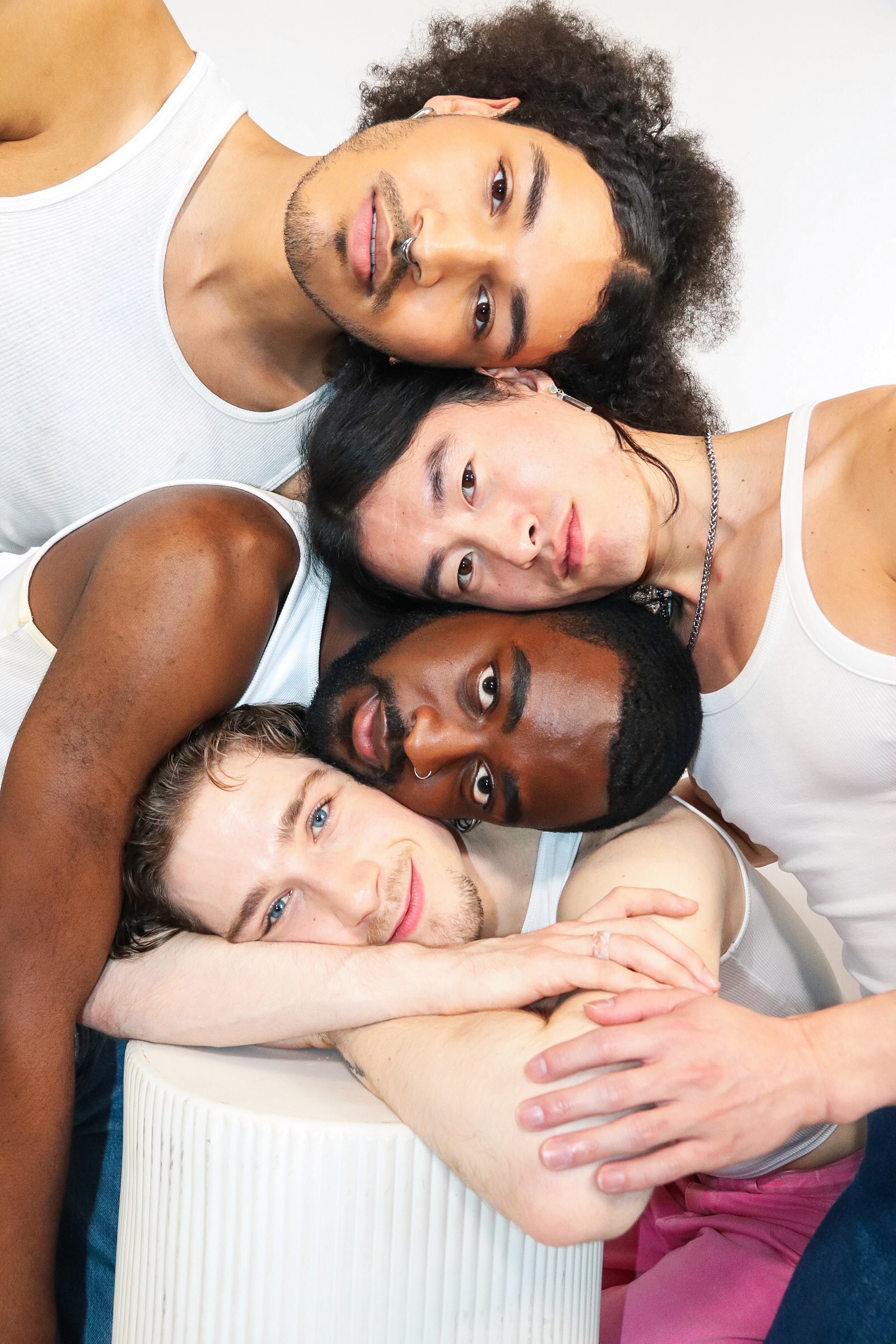
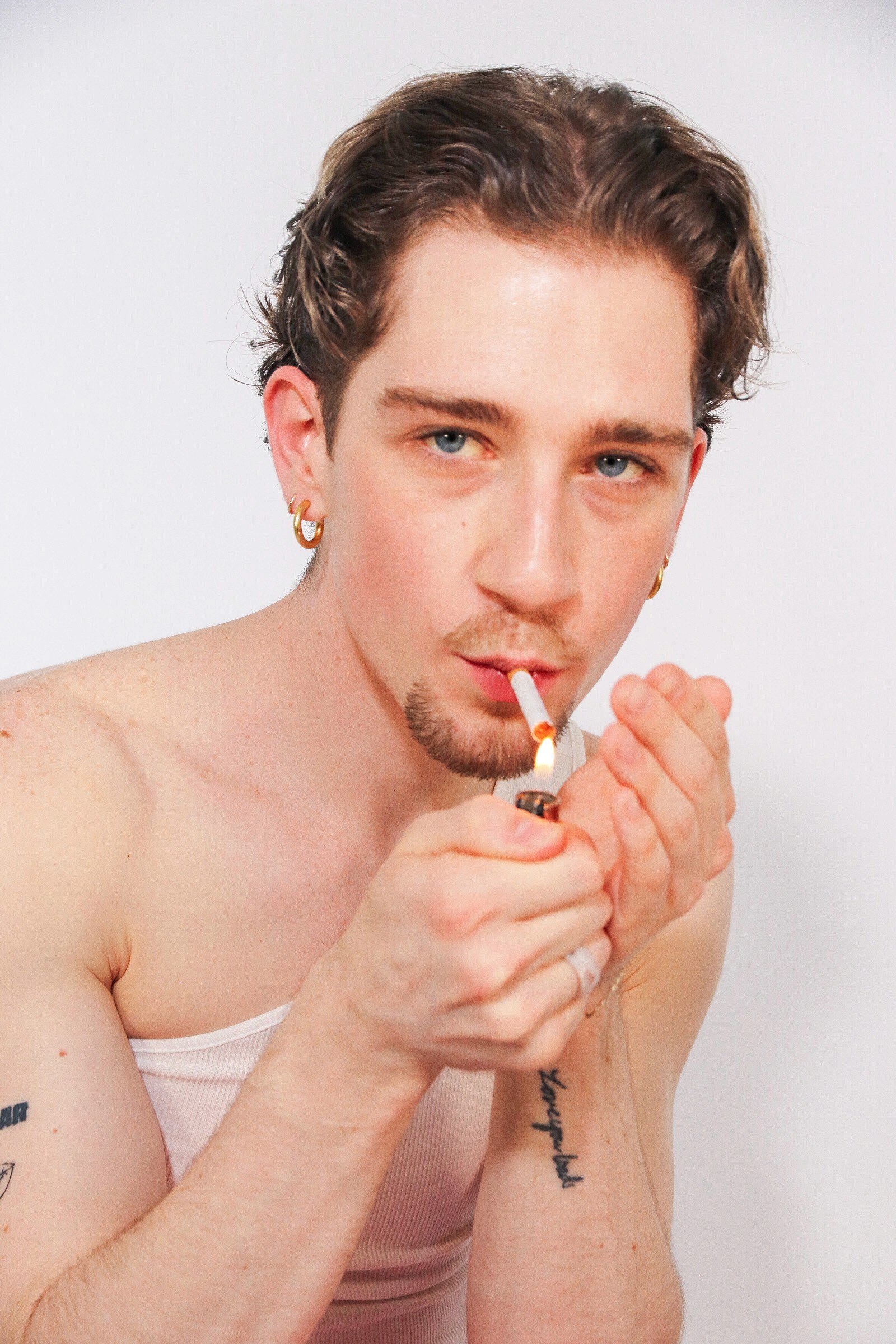
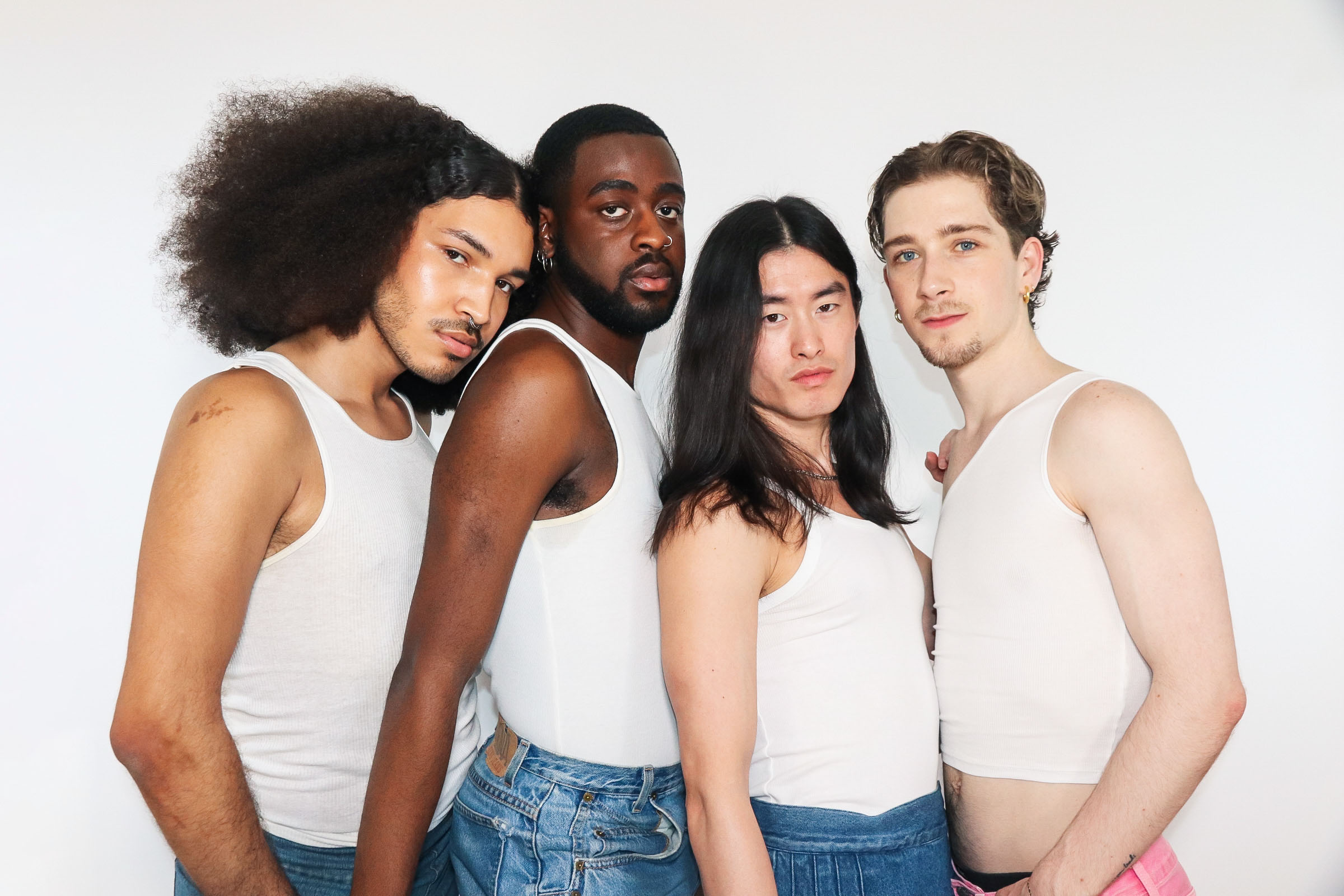
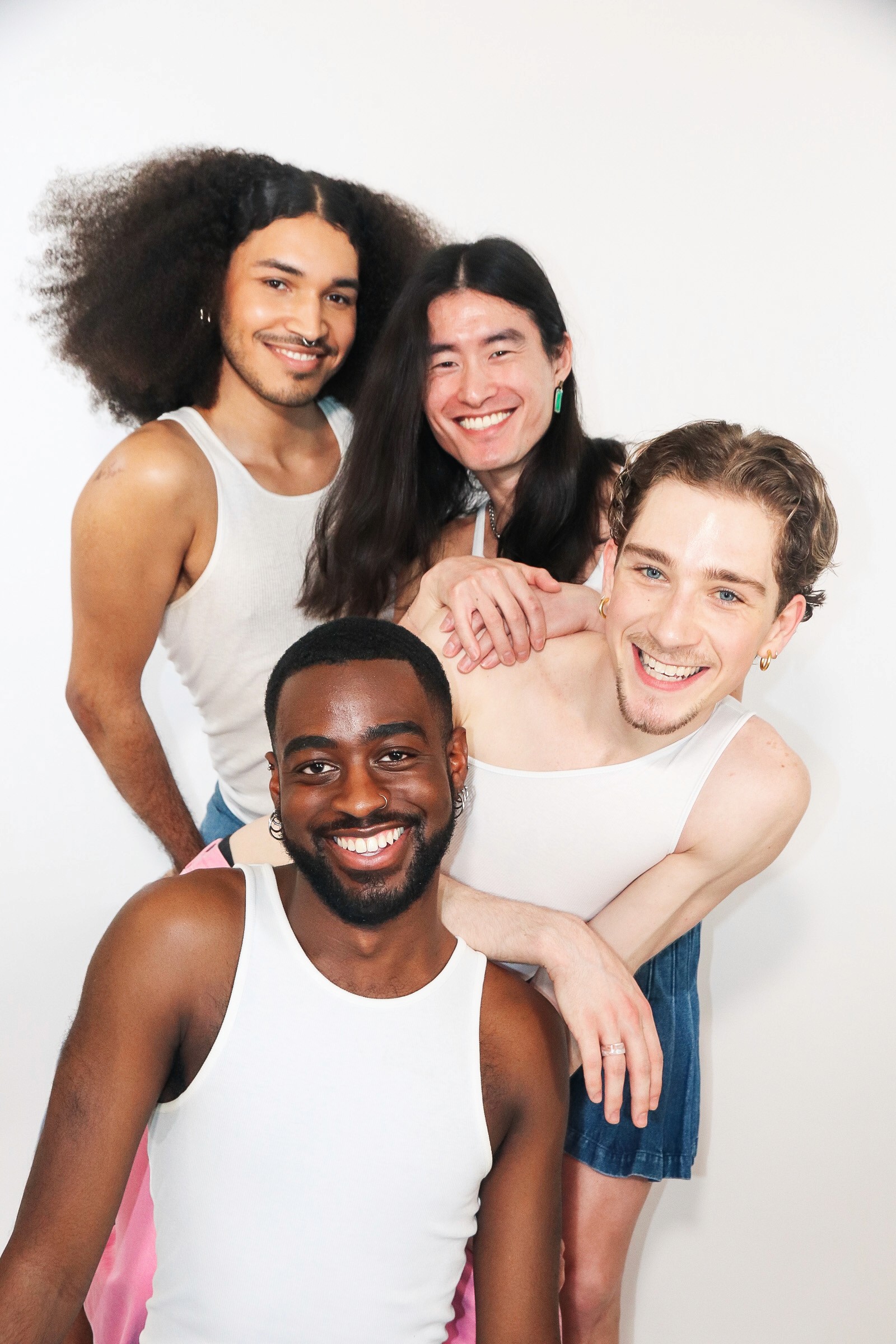
Lensed by Dainique Jones (@dainiquesphotos)
Styled by Bryce Ray (@popstarbiitch)
Style Asst: Sonya Stasiuk (@sonyastasiuk)
Production Asst: Ty Dalrymple (@tydalrymple)